
Golf Community Buyers Make This Mistake All the Time
 Golf Community Buyers Make This Mistake All the Time
One of the easiest mistakes to make when buying in a golf community near Hilton Head or Bluffton is assuming the listing tells the whole story.
It usually does not.
A home can sit behind a gate, overlook a fairway, have a clubhouse nearby, and still not include the golf access, club privileges, or membership structure the buyer has in mind.
That is where people get surprised.
Around Hilton Head, Bluffton, Okatie, and the surrounding Lowcountry, "golf community" can mean several different things. Sea Pines, Palmetto Dunes, Shipyard, Hilton Head Plantation, Indigo Run, Long Cove, Wexford, Moss Creek, Belfair, Berkeley Hall, Colleton River, Hampton Hall, Oldfield, and Palmetto Bluff all attract golf or private-club buyers in different ways.
But they are not the same product.
Some are resort communities where golf is one part of a broader vacation or second-home lifestyle. Some are private residential club communities. Some have optional memberships. Some have mandatory club structures. Some separate the neighborhood from the golf operation. Some have public or resort-style golf access. Some have initiation fees, dues, assessments, guest rules, food and beverage minimums, waitlists, or membership categories that affect how the buyer can actually use the community.
The house is only part of the purchase.
The lifestyle structure behind the house matters just as much.
The Mistake: Thinking "Golf Community" Means Golf Is Included
This is the mistake buyers make all the time.
They see a home in a golf community and mentally combine three things into one simple idea: the house, the neighborhood, and the club.
But in real life, those can be separate pieces.
Buying the house may get you into the neighborhood. It may not automatically give you full golf privileges. It may not mean the membership transfers. It may not mean the dues are included in the HOA. It may not mean you can use every amenity the way you assumed from the listing photos.
The listing may say "golf community."
The better question is: what exactly comes with ownership?
That question matters before you fall in love with the view.
Hilton Head and Bluffton Golf Communities Work Differently
The Hilton Head and Bluffton markets both have strong golf-community options, but the buyer logic is often different.
On Hilton Head, golf is often part of a broader island lifestyle. A buyer may be comparing golf access alongside beach access, bike paths, villa ownership, short-term rental potential, resort amenities, marina areas, restaurants, and second-home convenience.
Palmetto Dunes is a good example of a resort-style community where golf is part of a larger lifestyle package that also includes beach access, biking, kayaking or canoeing on the lagoon system, tennis, Shelter Cove access, and vacation rental options. Palmetto Dunes also describes all three of its golf courses as 18-hole championship layouts.
Shipyard is another Hilton Head example where golf is important, but it is not the whole decision. Shipyard Golf Club has 27 holes, but buyers are often also weighing gated access, beach access, tennis, villa inventory, south-end convenience, and price position compared with Sea Pines or Palmetto Dunes.
Private residential club communities work differently. Long Cove, Wexford, Moss Creek, Belfair, Berkeley Hall, Colleton River, Hampton Hall, Oldfield, and Palmetto Bluff are usually more about the full club lifestyle, not just whether there is a golf course nearby.
That is why "golf community" is too broad by itself.
The real question is whether the buyer wants resort golf, private club life, golf views, social amenities, beach proximity, boating, gated privacy, mainland convenience, or a mix of several things.
The House May Fit, But the Membership May Not
A golf-view home can look perfect online.
The photos show an open fairway. The backyard feels peaceful. The landscaping looks mature. The clubhouse may be nearby. The price may even look attractive compared with other homes in the area.
But the membership structure can completely change the ownership experience.
One buyer may want unlimited golf, club dining, tournaments, fitness, racquets, events, and a strong social calendar. That buyer may be comfortable with higher dues and initiation fees because the club is a major part of why they are buying.
Another buyer may only play golf a few times a year. They may love the view, but not want a heavy club obligation.
A third buyer may not care about golf at all. They may just want a gated neighborhood, privacy, mature landscaping, walking paths, and a quiet Lowcountry setting.
All three buyers can be right.
But they should not shop the same way.
The "best" golf community is not automatically the one with the prettiest fairway photo. It is the one where the property, the club structure, the cost, and the buyer's real lifestyle all line up.
The True Cost Is Bigger Than the Purchase Price
When buyers compare homes, they usually look at price, taxes, insurance, HOA fees, condition, and maybe flood zone.
In golf and private club communities, that is not enough.
The buyer also needs to understand how the club and community costs work. Some fees may be one-time. Some may be annual. Some may be monthly. Some may be refundable, partially refundable, or nonrefundable. Some may be tied to the property. Some may be tied to the person joining the club. Some may change after closing.
Long Cove is a good example of why this matters. Its official 2026 fee page lists a $75,000 initiation fee, $20,867 in 2026 annual dues, and a special assessment tied to a clubhouse enhancement project. That does not mean every private club community works like Long Cove. It means buyers need to verify the real cost structure before they treat the list price as the full financial picture.
Depending on the community, the full ownership cost may include HOA or POA dues, regime fees if it is a villa or townhome, club dues, initiation fees, capital contributions, transfer fees, food and beverage minimums, cart fees, trail fees, locker fees, guest fees, assessment exposure, insurance, maintenance, and normal property carrying costs.
That does not mean buyers should avoid private club communities.
It means they should underwrite the lifestyle honestly.
The wrong question is, "Can I afford the house?"
The better question is, "Does the full ownership cost make sense for how I plan to use the property?"
That one shift can prevent a lot of regret.
A Golf View Is Not the Same as Golf Access
This is one of the biggest misunderstandings in golf-community real estate.
A home can have a golf view without giving the buyer the golf experience they expected.
A social membership is not the same as a full golf membership. A resort golf course is not the same as a private member-only course. A gated community with golf nearby is not automatically a private club community. A membership category that allows limited tee times is not the same as unlimited golf access.
Country Club of Hilton Head is a useful example of why membership categories matter. Its membership page lists different categories such as All Island Golf, Full Golf, Associate Golf, Social, and Racquet, each with different access language. A buyer who does not read the details could hear "country club membership" and assume more than the category actually includes.
This is also why a fairway view should be evaluated separately from the club access.
A great golf view can still add appeal. Wide, private, attractive golf views often help a property feel more open and scenic. But view quality depends on the actual setting: fairway width, cart-path location, tee-box exposure, ball-strike risk, noise, privacy, outdoor living orientation, and how the home sits on the lot.
Some buyers love watching golfers pass by.
Others do not want carts, maintenance equipment, or golf balls near the backyard.
The view matters.
But access, use rights, and lifestyle fit matter too.
Resort Golf, Private Club Golf, and Public Golf Are Different Decisions
This is where buyers need to slow down.
A resort golf community is usually not the same purchase as a private residential club community.
Sea Pines, Palmetto Dunes, and Shipyard can appeal to buyers who want golf mixed with vacation energy, villas, beach access, second-home use, rentals where allowed, restaurants, biking, and family convenience. The golf matters, but it may not be the only reason people buy there.
A private residential club community is usually a deeper lifestyle decision. The buyer may be choosing the club culture, dining, fitness, racquets, social life, golf access, marina access, gated privacy, and the rhythm of living inside that community.
Wexford is a good example of a community where golf is only one piece of the lifestyle. Wexford identifies its golf course as a Signature Arnold Palmer Design, but the community also has a strong boating and harbour identity, including Wexford Yacht Club participation for residents.
Palmetto Bluff is another example where golf should not be isolated from the broader club lifestyle. Palmetto Bluff says every resident is required to become a Club member, and its golf page describes membership in the Palmetto Bluff Golf Club as granting access to May River Golf Course, Crossroads, and Anson Point.
Then there are public or semi-private golf options near residential areas. Hilton Head National, located in Bluffton, describes itself as offering a private-club feel while being open to all, with no houses directly lining its fairways or greens. That is a different decision from buying inside a mandatory private club community.
The buyer needs to know which lane they are actually in.
The Seller Side: Do Not Sell Only the Fairway
This matters for sellers too.
If you are selling a golf-community home near Hilton Head or Bluffton, the marketing should not rely only on a pretty view or the name of the neighborhood.
Buyers are more cautious now. They want to understand the property and the lifestyle. They are comparing the home, the view, the condition, the floor plan, the community, the fees, the membership structure, the amenities, and the long-term cost of owning there.
That means a seller needs to make the value easy to understand.
If the strongest feature is a private golf view, explain the setting clearly. If the value is club proximity, show what that means. If the home is in a community where golf is optional, do not make the buyer think it is mandatory. If the community has a private club structure, help the buyer understand that the club is part of the lifestyle decision, not a footnote.
The best golf-community listings do not just say "golf view."
They explain why the property works for the right buyer.
That could be privacy, open green space, a strong club culture, low-maintenance living, easy access to amenities, a full-time residential feel, second-home usability, or a quieter alternative to beach-heavy resort areas.
The more clearly the listing explains the real ownership experience, the easier it is for the right buyer to connect with it.
Questions Buyers Should Ask Before Buying in a Golf Community
Before buying in a golf or private club community near Hilton Head or Bluffton, buyers should get clear answers to a few practical questions.
Key Questions to Verify
Is golf membership required, optional, limited, or separate from ownership?
Does membership transfer with the property, or does the buyer need to apply separately?
Are there initiation fees, dues, capital contributions, transfer fees, food and beverage minimums, cart fees, trail fees, guest fees, or assessment exposure?
Are there waitlists or limitations on golf access?
What amenities are included with ownership, and which require a separate membership category?
Are renters, guests, or family members allowed to use the club amenities, and under what rules?
Is the golf course public, semi-private, resort-operated, private, or member-only?
Are there current or planned capital projects that could affect costs?
Does the home's golf view create privacy, or does it create exposure to carts, balls, maintenance, or noise?
How does the community fit the buyer's actual lifestyle: full-time living, retirement, second home, rental use where allowed, golf, club life, privacy, boating, beach access, or mainland convenience?
The Bottom Line
Golf-community buyers usually do not regret buying near golf because of the grass.
They regret it when the lifestyle they imagined does not match the structure they actually bought into.
The house may be beautiful. The view may be great. The community may have a strong reputation. But if the membership, fees, access rules, guest policies, or club culture do not fit the buyer's real plans, the purchase can feel off after closing.
That is why golf and private club communities near Hilton Head and Bluffton need to be compared carefully.
Sea Pines is not Long Cove.
Palmetto Dunes is not Wexford.
Shipyard is not Colleton River.
Moss Creek is not Palmetto Bluff.
Hilton Head National is not a mandatory private club community.
And a golf view is not the same thing as full golf access.
The smart move is to look past the listing photos and ask what ownership really includes.
That is how buyers find the right fit — and how sellers position the property properly.
FAQ
Does buying in a golf community automatically give me golf access?
No. It depends on the community, the club structure, the membership category, and the specific property. A home can be located in or near a golf community without automatically including full golf privileges.
Is a golf view always worth more?
Not always. A wide, private, attractive golf view can help value, but cart-path exposure, tee-box proximity, ball-strike risk, maintenance noise, or limited privacy can reduce the appeal. The actual view matters more than the phrase "golf view."
Are Hilton Head golf communities different from Bluffton golf communities?
Often, yes. Hilton Head golf communities frequently connect to island lifestyle, beach proximity, resort amenities, second homes, villas, and established neighborhoods. Bluffton and nearby mainland communities often lean more toward larger homes, private club campuses, newer resale options, full-time living, gated privacy, and mainland convenience. Neither is automatically better. The right fit depends on the buyer.
Should I buy in a golf community if I do not play golf?
Possibly. Many buyers choose golf communities for views, privacy, green space, security, social life, dining, racquets, fitness, walking paths, and community standards. The key is making sure the cost structure still makes sense if golf itself is not the main reason you are buying.
What should buyers verify before making an offer?
Buyers should verify the current membership requirements, fees, dues, transfer rules, guest access, golf privileges, waitlists, rental rules, HOA or POA documents, assessments, food and beverage minimums, insurance, and any property-specific restrictions before making an offer or relying on listing language.
 Thinking About Buying in a Golf or Private Club Community?
If you are comparing golf communities on Hilton Head, in Bluffton, or around the Lowcountry, the right answer depends on more than the house.
You need to understand the community, the club, the membership structure, the fees, the view, the lifestyle, and how you actually plan to use the property.
That is where local guidance matters.
Joel Androna — HHI Condo Guy / Hilton Head Island Condo Guy Hilton Head condos, Hilton Head homes, Bluffton homes, golf communities, private club properties, second homes, retirement properties, and Lowcountry real estate.
Categories
- All Blogs (108)
- Hilton Head Condo Buyer Strategy (7)
- Beach Access & Coastal Ownership (1)
- Bluffton & Lowcountry Living (2)
- Bluffton Buyer / Seller / Comparison Topics (2)
- Bluffton Communities and Relocation (4)
- Bluffton Real Estate (8)
- Bluffton Real Estate / Relocation Guide (2)
- Buyer Advice (1)
- Buyer Guides (1)
- Costs, Fees, Insurance, Financing, and Due Diligence (1)
- Golf / Private Club / Gated Community Living (1)
- Golf / Private Club Communities (1)
- Hilton Head & Bluffton Buyer Strategy (1)
- Hilton Head Area Comparisons (1)
- Hilton Head Communities (4)
- Hilton Head Communities & Area Guides (11)
- Hilton Head Condo Buyer Guide (9)
- Hilton Head Condo Market Updates (1)
- Hilton Head Condo Seller Strategy (1)
- Hilton Head Condos & Villas (14)
- Hilton Head Homes (1)
- Hilton Head Homes + Island Living (2)
- Hilton Head Homes and Island Living (1)
- Hilton Head Real Estate (1)
- Hilton Head Seller Strategy (8)
- Hilton Head Short-Term Rental + Investment Guide (1)
- Hilton Head vs Bluffton (1)
- Hilton Head vs Bluffton / Relocation (3)
- Lowcountry Homeownership (1)
- Market Reports & Trends (4)
- Relocation and Retirement (1)
- Retirement & Relocation (1)
- Retirement and 55+ Communities (1)
- Retirement and Relocation (2)
- Retirement, 55+ & Private Club Living (3)
- Seller Strategy and Valuation (1)
- Short-Term Rentals & Investment (3)
Recent Posts
Should You Buy in Beaufort Instead of Hilton Head or Bluffton?
Hampton Hall vs Hampton Lake: Golf-Centered or Lake-Centered Living?
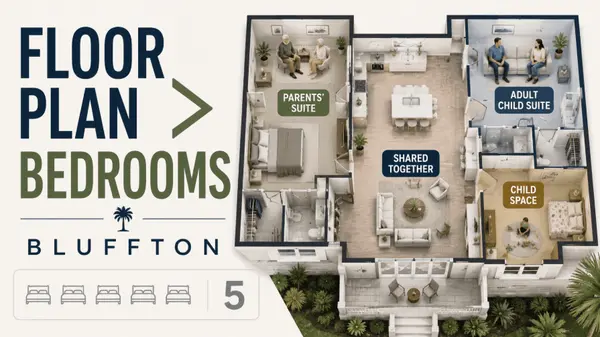
Multigenerational Living in Bluffton: The Floor Plan Matters More Than the Bedroom Count
Buying a Lowcountry Home With a Private Dock: What Buyers Need to Verify
Selling After You Move Out: Vacant, Staged, or Left Furnished?
Flood Zone, Elevation, and Insurance: Why the House Next Door Can Carry a Different Risk
Septic vs Sewer in Bluffton and the Lowcountry: What Changes for the Buyer?
Buying a Stucco Home in the Lowcountry: What Buyers Should Investigate
Private Pool vs Community Pool: What Bluffton Buyers Are Really Choosing
Buying a Golf-Course Home When You Do Not Actually Golf