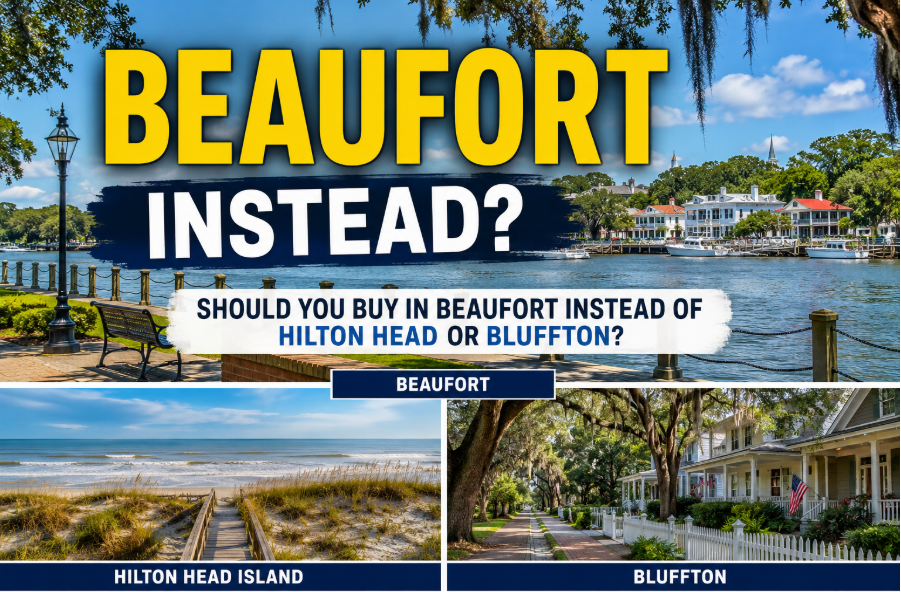
Should You Buy in Beaufort Instead of Hilton Head or Bluffton?
Should You Buy in Beaufort Instead of Hilton Head or Bluffton?
Beaufort often enters the home search as the quieter and supposedly less expensive alternative to Hilton Head or Bluffton. That description is not completely wrong, but it can lead buyers into the wrong comparison.
Beaufort is not a discounted version of either place. It changes where your daily life happens, what kinds of homes you will consider, which conveniences remain close, how often you will use Hilton Head, and what kind of Lowcountry experience you are actually buying.
Some buyers will get more house for their money in Beaufort. Others will discover that the Beaufort property they truly want—a renovated historic home, a waterfront house, a newer home in a recognizable community, or a property close to downtown—is not inexpensive at all.
The decision should not begin with which town has the lowest median price. It should begin with which location supports the life you expect to repeat every week.
Beaufort is not a cheaper Hilton Head. It is a different center of gravity.
The Price Comparison Is Less Obvious Than It Looks
Current citywide numbers show why buyers should be careful with broad price comparisons. In June 2026, Realtor.com reported median listing prices of approximately $489,000 in Beaufort, $495,000 on Hilton Head Island, and $569,000 in Bluffton. Those figures make Beaufort look less expensive than Bluffton and almost identical to Hilton Head.
But those markets contain very different property inventories. Hilton Head’s number includes a large supply of condos and villas alongside million-dollar residential communities. Bluffton includes starter neighborhoods, 55-plus communities, large planned developments, golf communities, luxury private clubs, resale homes, and new construction. Beaufort includes older in-town homes, historic properties, conventional subdivisions, waterfront neighborhoods, Lady’s Island, and communities well outside the downtown peninsula.
Even within Beaufort, the price changes quickly by location and property type. Realtor.com’s June 2026 data showed a median listing price of approximately $389,900 in the Southern Peninsula, $524,900 on Lady’s Island, $825,000 in Habersham, and $949,000 in the Beaufort Historic District.
A lower citywide median does not automatically produce a better value. It often reflects a different mix of properties.
The useful comparison is not Beaufort versus Hilton Head versus Bluffton in the abstract. It is the Beaufort house you would realistically buy against the Hilton Head or Bluffton property you would realistically choose.
What Changes When You Choose Beaufort
Beaufort gives buyers something that is difficult to reproduce in a newer planned community: an established waterfront town with a visible historic core and a daily identity that is not primarily organized around resorts.
Downtown revolves around the Beaufort River, Henry C. Chambers Waterfront Park, the marina, restaurants, shops, civic activity, and historic neighborhoods. The city-owned downtown marina sits directly on the Atlantic Intracoastal Waterway, while the waterfront park connects the river to the downtown commercial area.
That can work extremely well for someone who wants to live near an actual town center rather than inside a large private development. The appeal may be walking to dinner, seeing the river during an ordinary afternoon, living among older homes, or having a neighborhood that feels established rather than recently built.
The tradeoff is that Beaufort does not offer the same concentration of island beaches, vacation-oriented property, golf and resort communities, or large-scale planned neighborhoods found farther south.
Buyers who choose Beaufort usually need to want Beaufort itself. It becomes frustrating when someone buys there only because the house appeared cheaper and then continues driving south for most of the places, people, or activities that originally attracted them to the Lowcountry.
Beaufort Versus Hilton Head: Riverfront Town or Island Ownership?
The difference between Beaufort and Hilton Head is much larger than the distance between them suggests.
A buyer looking at HILTON HEAD ISLAND HOMES may be prioritizing beach access, island recreation, established gated communities, golf, second-home use, proximity to vacation amenities, or the ability to own a condo or villa instead of a conventional house.
A Beaufort buyer is more likely to organize the search around downtown access, river and marsh settings, boating, historic character, neighborhood atmosphere, military-related employment, or a more traditional year-round town.
Waterfront is not the same as beach proximity.
Beaufort can offer beautiful river, creek, and marsh environments, but someone who wants regular ocean access should not assume that any coastal address will create the same routine as living on Hilton Head. A buyer who pictures morning walks on an island beach may eventually resent driving to reach the experience that originally motivated the move.
Hilton Head also has a much broader condo and villa market. That creates options for buyers who do not want a detached house, yard maintenance, or an older property. It also creates a different ownership analysis involving regime fees, building condition, insurance, rental rules, assessments, financing, and seasonal activity.
Beaufort is more likely to lead the buyer toward a conventional house, historic residence, townhome, neighborhood property, or waterfront home. The exact choices still vary considerably, but the overall search feels more residential and less tied to resort property.
Choose Hilton Head when the island itself is central to the purchase.
Choose Beaufort when the riverfront town, historic surroundings, and northern Beaufort County lifestyle are central to the purchase.
Do not choose Beaufort and expect it to function like an island address.
Beaufort Versus Bluffton: Established Town or Growing Mainland Community?
The Beaufort-versus-Bluffton comparison is closer, but the daily experience still differs substantially.
Bluffton has grown into a large mainland market with extensive residential development, commercial corridors, newer construction, private communities, golf neighborhoods, 55-plus options, and access to Hilton Head and the greater Savannah area. Census estimates put Bluffton’s population at 36,807 in 2025, approximately 33 percent higher than its 2020 estimate base.
That growth gives buyers more choices, but it also means “Bluffton” can describe dramatically different experiences. Old Town, Sun City, Hampton Lake, Hampton Hall, Belfair, Cypress Ridge, Palmetto Bluff, and an entry-level neighborhood near the commercial corridors do not function like one market.
Buyers comparing BLUFFTON HOMES are frequently choosing among neighborhood structure, age of construction, amenities, club obligations, yard size, garage space, traffic patterns, and access to shopping or Hilton Head.
Beaufort offers fewer versions of the large planned-community experience. Its strongest appeal is often more established: older neighborhoods, downtown proximity, mature trees, the Beaufort River, nearby islands, historic architecture, and a town identity that existed long before the latest development cycle.
Bluffton gives you more ways to build a daily routine.
Beaufort gives you a stronger sense of place.
Neither advantage is universal. Some buyers want the convenience and housing variety of Bluffton. Others would gladly accept fewer large commercial options in exchange for Beaufort’s smaller scale and older surroundings.
The Word “Beaufort” Covers More Than Downtown Beaufort
A Beaufort search can become confusing because the city, mailing addresses, nearby islands, and surrounding communities are often grouped together online.
A downtown historic property, a conventional home in Mossy Oaks, a house on Lady’s Island, a newer property in Habersham, a home near Port Royal, and a waterfront residence farther outside town may all appear during the same general search. They should not be evaluated as though they offer the same commute, flood profile, maintenance burden, community structure, or access to downtown.
That variety is one of Beaufort’s strengths, but it means buyers have to identify the actual geographic area they want before comparing prices.
Someone who says, “I want to live in Beaufort,” may actually want one of several very different things:
- A walkable historic setting
- A conventional residential neighborhood
- A larger lot outside the central peninsula
- A community with newer construction
- A river, creek, or marsh-oriented property
- Easier access to one of the military installations
- A home near Port Royal or Lady’s Island rather than inside the City of Beaufort
Those are separate searches. Combining them into one Beaufort average can create unrealistic expectations about price and daily life.
Historic Character Comes With Ownership Responsibilities
Beaufort’s historic homes are a major reason some buyers prefer it, but architectural character should not be separated from the work required to preserve it.
The city’s historic district covers the original town area and is designated as a National Historic Landmark District. Projects involving demolition, new construction, additions, rehabilitation, renovation, and restoration may be reviewed through the Historic District Review Board and the city’s preservation standards.
That does not make a historic home a bad purchase. It means the buyer should understand the property before treating its age and appearance as purely decorative.
Older windows, foundations, electrical systems, plumbing, roofs, crawl spaces, drainage, exterior materials, and prior renovations can all affect the cost of ownership. Proposed exterior changes may also require a different approval process than they would in a nonhistoric neighborhood.
A renovated historic home can be an exceptional purchase when the work was done well and the buyer values what the property represents.
A neglected historic home can absorb money quickly.
Buy the character because you appreciate it enough to maintain it—not because it looked attractive during a weekend visit.
Military Activity Is Part of the Beaufort Area
Marine Corps Air Station Beaufort and Marine Corps Recruit Depot Parris Island are not distant background details. They are part of the area’s employment base, identity, traffic, and sound environment.
MCAS Beaufort openly advises that flight operations are noisy and that training includes day and night activity. Its planning materials also address noise zones and disclosures for certain affected properties. Parris Island remains an active recruit-training installation with approximately 20,000 recruits passing through annually.
For military households, civilian employees, contractors, and families connected to the installations, that proximity can make Beaufort the most practical choice in the region.
For other buyers, aircraft noise should be experienced before purchasing. Online maps and disclosures are useful, but they do not replace standing outside the house at different times of day.
A quiet showing on a Sunday afternoon does not tell you how the property will sound during a normal training week.
Do Not Assume Beaufort Removes Coastal Ownership Risk
Beaufort may feel removed from Hilton Head’s beachfront market, but it is still coastal Lowcountry real estate.
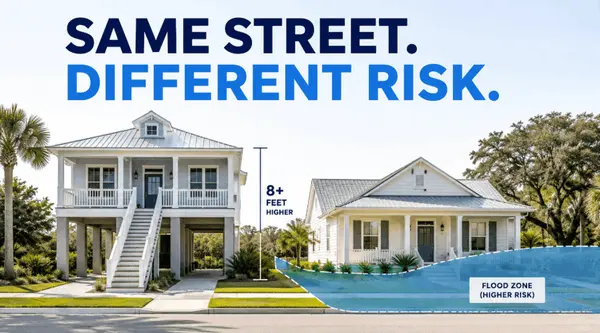
Flood exposure, drainage, wind coverage, elevation, marsh proximity, tree maintenance, humidity, crawl-space conditions, and storm preparation remain property-specific considerations. A house farther from the ocean can still have a more complicated flood or drainage profile than another property closer to the coast.
The same principle applies to ownership costs.
A Bluffton home may carry HOA or club obligations. A Hilton Head condo may have regime fees and building-level insurance concerns. A Beaufort property may have fewer community fees but require more direct spending on the roof, exterior, crawl space, drainage, landscaping, dock, seawall, or older mechanical systems.
The lowest monthly association fee does not always create the lowest ownership cost.
Convenience Depends on Where Your Life Happens
Beaufort makes the most sense when northern Beaufort County is where the buyer expects to live, work, shop, socialize, and spend most ordinary days.
Bluffton often works better for someone whose routine points toward Hilton Head, Savannah, southern Beaufort County communities, or the expanding commercial areas around Bluffton. Hilton Head works best when island access is not an occasional benefit but part of everyday life.
Before buying, test the routes that will actually matter:
- Drive to work during the time you would normally leave.
- Travel to the airport you expect to use.
- Visit family or friends from the property.
- Make an ordinary grocery and medical appointment run.
- Drive to Hilton Head during a busy period if you expect to go frequently.
- Spend a full weekday and evening in the immediate neighborhood.
A relocation decision can look completely different after those ordinary trips.
Buy the life you will repeat, not the weekend you enjoyed.
Who Is Most Likely to Prefer Beaufort?
Beaufort deserves serious consideration from buyers who want a smaller established town, historic surroundings, river and marsh access, older neighborhood character, a stronger connection to northern Beaufort County, or proximity to the military installations.
It may also appeal to buyers who are less interested in golf-community amenities, short-term rental potential, large planned developments, and direct beach access.
Beaufort may disappoint someone who expects the breadth of Bluffton’s newer neighborhood inventory, wants to visit Hilton Head several times each week, needs the easiest practical connection to Savannah, or wants a property centered on an island vacation lifestyle.
That buyer may save money on the house and spend the next several years wishing the house were somewhere else.
So, Should You Buy in Beaufort Instead?
Yes—when Beaufort solves the actual lifestyle and property decision better than Hilton Head or Bluffton.
Buy in Beaufort because you prefer its daily rhythm, historic environment, riverfront identity, housing options, or northern Beaufort County location. Do not buy there simply because a broad market number made it look like the affordable option.
Choose Hilton Head when the beach, island environment, golf, villas, second-home use, or resort-oriented ownership experience is central to the purchase.
Choose Bluffton when planned-community choices, newer construction, neighborhood amenities, mainland convenience, Hilton Head access, or proximity to Savannah carry more weight.
Choose Beaufort when you want Beaufort—not when you want Hilton Head or Bluffton at a lower price.
The strongest way to make this decision is to tour comparable properties in all three areas during the same trip. Keep the budget and basic requirements consistent. Then compare the home, location, ownership costs, route patterns, condition, and daily experience together.
You may discover that Beaufort gives you more of what you value.
You may also discover that paying more in Hilton Head or Bluffton prevents a much more expensive relocation mistake.
Use SEARCH LOWCOUNTRY HOMES to compare the actual properties available across the area, then narrow the search around the location that works on an ordinary Tuesday—not just the place that photographs best during a weekend visit.
 Frequently Asked Questions
Is Beaufort cheaper than Hilton Head or Bluffton?
It can be, but broad medians do not settle the question. In June 2026, Beaufort’s median listing price was below Bluffton’s and close to Hilton Head’s. The property inventories were not comparable, however. Hilton Head includes a large condo and villa supply, Bluffton spans numerous planned communities and price ranges, and desirable Beaufort historic or waterfront properties can cost considerably more than the citywide median.
Can I live in Beaufort and still visit Hilton Head regularly?
Yes, but “regularly” should be defined honestly. An occasional island day is different from working on Hilton Head, visiting several times each week, or expecting the beach and island amenities to be part of your normal routine. Test the drive at the times you would actually make it before choosing the house.
Is Beaufort better than Bluffton for a full-time resident?
Beaufort may work better for someone who values an established town, historic neighborhoods, riverfront surroundings, and northern Beaufort County access. Bluffton may work better for someone who wants more planned-community options, newer homes, expanding retail and services, or easier access to Hilton Head and Savannah. The better answer depends on the buyer’s recurring routine.
What should I investigate before buying a historic Beaufort home?
Review the age and condition of the major systems, prior renovation permits, exterior materials, foundation or crawl space, drainage, insurance, flood information, and any restrictions affecting future work. For properties inside the historic district, determine which proposed changes may require approval through the City of Beaufort’s preservation process.
Should military aircraft noise affect where I buy?
It should at least be part of the investigation. MCAS Beaufort conducts necessary day and night flight training, and sound levels vary by property and flight pattern. Review applicable disclosures and noise information, but also visit the property during normal weekday operations before relying on one quiet showing.
Should I compare Beaufort city limits or the greater Beaufort area?
Compare both, but keep the locations separate. Downtown Beaufort, the historic district, Lady’s Island, Port Royal, Habersham, Mossy Oaks, and other nearby areas can produce very different prices, commute patterns, property conditions, and ownership experiences. Decide which surroundings you want before treating every Beaufort mailing address as interchangeable.
Categories
- All Blogs (108)
- Hilton Head Condo Buyer Strategy (7)
- Beach Access & Coastal Ownership (1)
- Bluffton & Lowcountry Living (2)
- Bluffton Buyer / Seller / Comparison Topics (2)
- Bluffton Communities and Relocation (4)
- Bluffton Real Estate (8)
- Bluffton Real Estate / Relocation Guide (2)
- Buyer Advice (1)
- Buyer Guides (1)
- Costs, Fees, Insurance, Financing, and Due Diligence (1)
- Golf / Private Club / Gated Community Living (1)
- Golf / Private Club Communities (1)
- Hilton Head & Bluffton Buyer Strategy (1)
- Hilton Head Area Comparisons (1)
- Hilton Head Communities (4)
- Hilton Head Communities & Area Guides (11)
- Hilton Head Condo Buyer Guide (9)
- Hilton Head Condo Market Updates (1)
- Hilton Head Condo Seller Strategy (1)
- Hilton Head Condos & Villas (14)
- Hilton Head Homes (1)
- Hilton Head Homes + Island Living (2)
- Hilton Head Homes and Island Living (1)
- Hilton Head Real Estate (1)
- Hilton Head Seller Strategy (8)
- Hilton Head Short-Term Rental + Investment Guide (1)
- Hilton Head vs Bluffton (1)
- Hilton Head vs Bluffton / Relocation (3)
- Lowcountry Homeownership (1)
- Market Reports & Trends (4)
- Relocation and Retirement (1)
- Retirement & Relocation (1)
- Retirement and 55+ Communities (1)
- Retirement and Relocation (2)
- Retirement, 55+ & Private Club Living (3)
- Seller Strategy and Valuation (1)
- Short-Term Rentals & Investment (3)
Recent Posts