A 55+ Community vs a Traditional Gated Community: Which Gives You More Freedom?
A 55+ Community vs a Traditional Gated Community: Which Gives You More Freedom?
A lot of retirement buyers assume a traditional gated community gives them more freedom because there is no age restriction.
That is only half the answer.
A traditional gated community usually gives you more freedom over who can live in the home, how your household can change, and who may eventually buy the property. A 55+ community can give you more freedom over your time, social life, maintenance responsibilities, and daily routine.
One option gives you more household flexibility. The other may remove more of the work involved in building a retirement lifestyle.
The right choice depends on which kind of freedom you are actually trying to gain.
Freedom Is Not the Same as Having No Rules
Both options normally come with rules.
A 55+ community is governed by an association, community standards, and age-qualification policies. A traditional gated community may have architectural controls, mandatory memberships, guest procedures, rental restrictions, amenity rules, and approval requirements of its own.
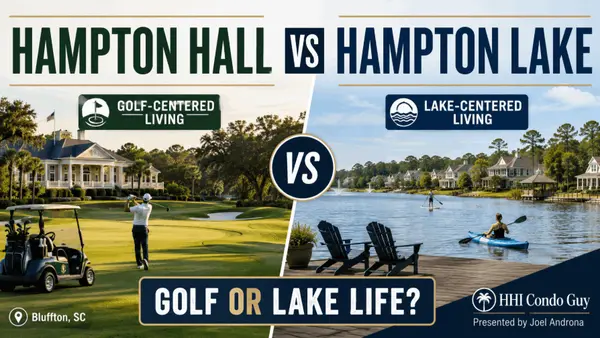
Hampton Hall, for example, is not age-restricted, but its governing structure still controls membership, use of club facilities, guest privileges, architectural standards, assessments, and other ownership obligations. Hampton Lake openly describes itself as a multigenerational community, but owners are still buying into a private amenity-based development rather than an unrestricted neighborhood.
The presence of an age restriction is therefore not the only measurement of control.
Freedom is not the absence of rules. It is having the right rules remove the work you no longer want without interfering with the choices you still need.
Where a 55+ Community Can Give You More Freedom
Your Social Life Is Easier to Start
One of the hardest parts of retiring to the Lowcountry is not finding a home. It is rebuilding a life after leaving the friends, routines, organizations, and familiar places you had somewhere else.
A good active-adult community reduces that friction.
Communities such as Sun City Hilton Head, Latitude Margaritaville Hilton Head, and Four Seasons at Carolina Oaks are organized around active-adult living. Depending on the community, residents may have access to clubs, fitness programs, recreation, social events, gathering spaces, classes, dining, entertainment, and organized activities.
Latitude Margaritaville Hilton Head promotes recreation, dining, entertainment, fitness facilities, sports, live events, and community gathering spaces as central parts of the ownership experience. Four Seasons at Carolina Oaks similarly promotes a full-time lifestyle director, pools, fitness facilities, activities, and a smaller active-adult setting.
That structure can be especially useful for a buyer moving alone, a couple leaving an established social network, or someone who does not want to spend the first several years of retirement searching for people with similar schedules.
A traditional gated community may also have an active social calendar. The difference is that a 55+ community is generally designed around residents who are in a similar stage of life and are more likely to be available during the day.
You are not guaranteed close friendships merely because you purchased behind the gate. But the introductions are easier.
The Community May Remove Work From Your Week
Many buyers looking at active-adult communities are not trying to stop being active. They are trying to stop spending their free time on work they no longer enjoy.
Depending on the neighborhood and property type, association services may reduce some combination of yard maintenance, common-area upkeep, exterior responsibilities, or amenity maintenance. The homes themselves are also frequently designed around single-level living, manageable yards, flexible guest rooms, and fewer spaces that exist only because the buyer once needed a larger family home.
Those details must be compared community by community. A 55+ label does not automatically mean the association handles the lawn, roof, exterior, irrigation, or every future repair.
The benefit comes when the home and association remove tasks you genuinely want to give up.
A smaller house is not freedom if it lacks the storage, garage space, office, or guest room you still need. An amenity package is not freedom if you pay for facilities you rarely use.
You May Gain More Control Over Your Calendar
A strong 55+ community can make an ordinary week easier to fill.
You may be able to exercise, meet friends, attend a class, play pickleball, join a club, hear live music, or eat with neighbors without organizing every detail yourself or driving across Bluffton.
That is a real form of freedom for someone who wants an active retirement but does not want to keep planning every social interaction from scratch.
The clubhouse is not valuable because it looked impressive during the tour. It is valuable only if it changes what you will actually do on a normal Tuesday.
Where a 55+ Community Can Limit Your Freedom
Your Household Has Less Room to Change
Federal regulations generally require at least 80 percent of occupied homes in qualifying 55-and-older housing to have at least one occupant who is 55 or older. Communities must also maintain policies showing their intent to operate as older-person housing and verify resident ages. Individual communities may adopt additional restrictions governing younger spouses, permanent occupants, guests, tenants, and children.
That may be irrelevant when you purchase and very important ten years later.
An adult child may need to live with you. A younger relative may become a caregiver. Grandchildren may need to stay for an extended period. A surviving younger spouse may need to understand what the documents allow. You may want to rent the home to someone who does not meet the age qualification.
A traditional gated community normally gives the household more room to adjust to those changes.
A 55+ community can make your calendar easier while making your household options narrower.
Guest Visits May Require More Planning
Children and grandchildren can generally visit active-adult communities, but the length of the visit, use of amenities, guest registration, vehicle access, pool hours, and overnight occupancy rules can vary.
Sun City Hilton Head, for example, publishes procedures for resident guest passes and limitations on the length of guest access. Traditional communities also regulate guest use of private facilities; Hampton Hall requires guest registration for certain amenities and maintains separate policies for children and immediate family.
The point is not that family cannot visit a 55+ community.
The point is that buyers who expect frequent or extended family stays should read the actual occupancy and guest provisions before assuming the arrangement will work.
The Future Buyer Pool May Be Narrower
A home in a well-run 55+ community can have strong demand, particularly when the amenities, location, fees, housing condition, and community reputation are competitive.
The age qualification still affects who can use the property as a residence. As a practical consequence, the eventual buyer pool can be narrower than it would be for a comparable all-ages home.
That does not automatically make the home difficult to sell. It means resale depends more heavily on demand from the active-adult market and how the property competes against other age-restricted options.
Buyers should consider not only whether they qualify today, but also who is likely to buy the home from them later.
Where a Traditional Gated Community Gives You More Freedom
You Have More Multigenerational Flexibility
Traditional gated communities such as Hampton Lake and Hampton Hall can attract retirees without legally limiting the neighborhood to retirees.
Hampton Lake describes its community and amenities as serving families and residents of different ages. Its facilities include recreation, water activities, pools, sports, trails, gathering spaces, and family-oriented areas. Hampton Hall's governing documents also anticipate immediate family members, children, and guests using the community under its membership rules.
That can work well for someone who wants retirement-oriented amenities but does not want their household choices controlled by an age qualification.
It may also appeal to buyers who expect children or grandchildren to move nearby, want a younger spouse to have fewer future concerns, or prefer living around several generations.
You May Have a Broader Choice of Homes
All-ages gated communities often provide a wider range of property sizes, custom homes, homesites, bedroom counts, garages, outdoor spaces, and architectural options.
That matters when retirement does not mean downsizing.
Some buyers still need a home office. Others want a three-car garage, a larger yard, a pool, room for visiting family, workshop space, or enough square footage for two people to have separate routines.
A traditional gated community may make it easier to find that combination without trying to force your life into a home designed around a standard active-adult floor plan.
More square footage is not automatically better. But having the ability to buy the amount and type of space you genuinely need is a form of freedom.
Your Resale Audience Is Usually Broader
An all-ages property can generally be marketed to retirees, working professionals, families, second-home owners, and other qualified buyers, subject to the community's specific rules.
That does not guarantee stronger resale. High dues, mandatory club costs, dated condition, weak location, or an oversized home can still limit demand.
It does mean age qualification is not another filter placed on the future purchaser.
A broader audience can be useful when your next move is driven by healthcare, family, finances, or another life change that does not wait for perfect market conditions.
Where a Traditional Gated Community Can Feel Less Free
The traditional gated option may give you more legal and household flexibility without giving you the retirement routine you expected.
Neighbors may include retirees, working adults, families with children, seasonal owners, and people whose daily schedules look nothing like yours. The community may offer amenities, but fewer activities may be organized specifically around active-adult residents.
Hampton Lake deliberately promotes a multigenerational environment, while Hampton Hall combines residential ownership with an active private-club structure. Those can be major advantages for the right buyer. They are simply different from purchasing into a community built primarily around older residents.
A traditional community may also put you in a larger house with more yard, exterior maintenance, unused rooms, and long-term upkeep than you wanted.
It can give your family more room to change while asking you to create more of the retirement lifestyle yourself.
Do Not Confuse a Traditional Community With an Unrestricted Community
Traditional gated communities can be highly regulated.
You may still encounter architectural approval, landscaping standards, vehicle rules, guest procedures, rental limits, mandatory association dues, club charges, amenity restrictions, and rules governing exterior changes.
Hampton Hall's recorded covenants describe a residential subdivision tied to a private club and require owners to participate in the community's membership and financial structure.
The useful comparison is therefore not rules versus no rules.
It is one set of rules against another.
One community may control the ages of permanent residents while simplifying lawn care and creating an active social structure. Another may welcome all ages while requiring a club membership, architectural approval, and a different level of property maintenance.
Read the documents for the life you plan to live, not merely for the house you plan to buy.
Which Buyer Usually Prefers a 55+ Community?
A 55+ community usually becomes more attractive when the buyer wants a built-in social network, active amenities, age peers, smaller or more manageable housing, and a community calendar that makes meeting people easier.
It can be especially useful for someone relocating without nearby friends or family.
The buyer should be comfortable with the age rules, guest procedures, association structure, fee obligations, and possibility that the future resale audience will be more specialized.
Buyers comparing the local options can begin with BLUFFTON AND HILTON HEAD 55+ COMMUNITIES. Someone particularly interested in the area's largest established active-adult environment can also review SUN CITY HILTON HEAD HOMES.
Which Buyer Usually Prefers a Traditional Gated Community?
The traditional gated option normally makes more sense when the buyer wants multigenerational flexibility, a broader selection of homes, room for extended family, fewer age-related occupancy concerns, and access to amenities without committing to an active-adult identity.
It can also work for retirees who already have friends, family, church groups, golf relationships, volunteer work, or other connections outside their neighborhood.
Those buyers may not need a community to create their social calendar.
They may value privacy, home size, family flexibility, water or golf access, architectural variety, or a particular Bluffton location more than an organized active-adult program.
The next step is to compare those options against the broader inventory of BLUFFTON HOMES rather than assuming every retirement buyer belongs in a 55+ development.
The Better Decision Starts With Your Ordinary Week
Do not make this decision while standing inside the nicest clubhouse on the tour.
Think about your actual week.
Where will you exercise? How often will family stay? Do you want scheduled activities or more privacy? Are you still working? Will a younger person ever need to live with you? How much home and yard do you want to maintain? Will you use the amenities enough to justify the fees? Do you expect the community to become your social world, or do you want most of your life to happen outside the gate?
The wrong community does not always feel wrong during the first year. It can become wrong when the household changes, the novelty of the amenities wears off, or the buyer realizes the community supports a different daily routine than the one they actually wanted.
Do not choose the clubhouse. Choose the ordinary Tuesday.
Which Gives You More Freedom?
A 55+ community often gives you more lifestyle freedom. It can reduce maintenance, simplify recreation, make friendships easier to form, and fill your schedule without requiring you to organize everything yourself.
A traditional gated community generally gives you more household freedom. It provides greater flexibility for younger residents, extended family, future buyers, and changes that may occur over the next ten or twenty years.
Neither option wins every comparison.
The better choice is the one that removes the obligations you want to lose without taking away the flexibility you may eventually need.
Message me if you are comparing Bluffton or Hilton Head-area retirement communities and want help looking beyond the clubhouse, model home, and community name.
 Frequently Asked Questions
Can a spouse under 55 live in a 55+ community?
Federal rules generally require at least 80 percent of occupied homes to include one resident who is 55 or older. That does not automatically require every occupant to be 55. Individual communities may impose additional minimum-age or occupancy rules, so the governing documents must be reviewed for the specific property.
Can grandchildren visit a 55+ community?
Usually, but guest registration, amenity access, overnight stays, pool use, and maximum visit lengths vary. Buyers expecting frequent or extended visits should review the community's current guest and occupancy policies before purchasing.
Do you have to be retired to live in a 55+ community?
No. The qualification is based on age and the community's occupancy rules, not whether the resident is employed. Buyers who still work should consider commute time, home-office needs, and whether most community activities occur during working hours.
Does a traditional gated community have fewer rules?
Not necessarily. An all-ages gated community may still regulate architecture, landscaping, guests, vehicles, rentals, club membership, amenity access, and exterior changes. The absence of an age restriction does not make the property unrestricted.
Is a 55+ home harder to resell?
Not automatically. Strong active-adult communities can attract substantial demand. The age qualification does narrow who can use the home as a residence, however, so condition, fees, amenities, location, community management, and competition from other 55+ homes become especially important.
Should I choose a 55+ community just for lower maintenance?
Only after verifying what the association actually maintains. Services differ by community, neighborhood, and property type. Compare lawn care, irrigation, exterior maintenance, roof responsibility, insurance, amenity costs, reserves, and the homeowner's remaining obligations.
Categories
- All Blogs (108)
- Hilton Head Condo Buyer Strategy (7)
- Beach Access & Coastal Ownership (1)
- Bluffton & Lowcountry Living (2)
- Bluffton Buyer / Seller / Comparison Topics (2)
- Bluffton Communities and Relocation (4)
- Bluffton Real Estate (8)
- Bluffton Real Estate / Relocation Guide (2)
- Buyer Advice (1)
- Buyer Guides (1)
- Costs, Fees, Insurance, Financing, and Due Diligence (1)
- Golf / Private Club / Gated Community Living (1)
- Golf / Private Club Communities (1)
- Hilton Head & Bluffton Buyer Strategy (1)
- Hilton Head Area Comparisons (1)
- Hilton Head Communities (4)
- Hilton Head Communities & Area Guides (11)
- Hilton Head Condo Buyer Guide (9)
- Hilton Head Condo Market Updates (1)
- Hilton Head Condo Seller Strategy (1)
- Hilton Head Condos & Villas (14)
- Hilton Head Homes (1)
- Hilton Head Homes + Island Living (2)
- Hilton Head Homes and Island Living (1)
- Hilton Head Real Estate (1)
- Hilton Head Seller Strategy (8)
- Hilton Head Short-Term Rental + Investment Guide (1)
- Hilton Head vs Bluffton (1)
- Hilton Head vs Bluffton / Relocation (3)
- Lowcountry Homeownership (1)
- Market Reports & Trends (4)
- Relocation and Retirement (1)
- Retirement & Relocation (1)
- Retirement and 55+ Communities (1)
- Retirement and Relocation (2)
- Retirement, 55+ & Private Club Living (3)
- Seller Strategy and Valuation (1)
- Short-Term Rentals & Investment (3)
Recent Posts