
Bluffton Townhome vs Single-Family Home: What Buyers Gain and Give Up
Bluffton Townhome vs Single-Family Home: What Buyers Gain and Give Up
A lot of Bluffton buyers treat this decision as a simple choice between the cheaper townhome and the better single-family home.
That is usually too shallow.
A townhome may lower the purchase price, reduce yard work, and put the buyer closer to shopping, work, or Old Town Bluffton. A detached home may provide more privacy, better parking, a usable yard, and greater control over the property. Neither option automatically creates the better ownership experience.
The mistake is comparing only the list price. Buyers also need to compare the monthly payment, association dues, insurance structure, maintenance responsibilities, parking, storage, outdoor space, shared walls, future flexibility, and how long they expect the home to work for them.
Bluffton has grown quickly, with the Census Bureau estimating a 33% population increase between 2020 and 2025. The town's housing plan, using 2021 data, found that approximately 80% of its housing was detached single-family homes while about 12% was attached single-family housing. That helps explain why townhomes can fill an important gap for buyers who want Bluffton ownership without taking on the price, space, or workload of a larger detached property.
A Townhome Is Not Just a Smaller House
Townhome inventory in Bluffton is more varied than many buyers expect. Current listings include smaller two-bedroom properties, larger end units, three-level new construction, attached homes in active-adult communities, and higher-end properties with garages and substantial living space. Townhome is a property format, not a single price range or buyer profile.
Some buyers use a townhome to enter Bluffton at a lower price. Others could afford a detached home but prefer to spend less time managing a yard, roof, driveway, or exterior. A retiree, frequent traveler, single buyer, or household without much interest in outdoor space may value that convenience more than an additional bedroom or a larger lot.
That is the first important distinction: a townhome should not be viewed only as the property someone buys because a detached home is out of reach. It can be the better use of the buyer's money and time.
What Buyers Gain With a Bluffton Townhome
A Potentially Lower Entry Point
The most obvious advantage is often the purchase price. Attached construction uses land differently, and buyers may be able to purchase a newer property or a more convenient location without paying for the lot size and separation that come with a detached home.
That advantage needs to survive the monthly-payment comparison.
A townhome priced below a detached home may still have higher association dues. Those dues could cover landscaping, common areas, community amenities, exterior maintenance, insurance, private roads, or other services. They could also cover much less.
A lower purchase price does not automatically create a lower ownership cost.
The useful comparison is the mortgage payment, taxes, insurance, association dues, utilities, and the expenses the owner will still handle personally. Buyers should also consider what they would otherwise pay for lawn care, exterior upkeep, or community amenities.
Less Exterior Work—Sometimes
Many townhome buyers are attracted to the possibility of lower-maintenance ownership. That can be a legitimate advantage when the association handles meaningful exterior responsibilities.
The problem is that buyers sometimes hear "townhome" and assume the roof, siding, landscaping, pest treatment, exterior insurance, driveways, and common elements are all covered.
That is not a safe assumption.
Some Bluffton townhomes are owned more like detached homes, with the owner responsible for most or all of the structure. Others may be legally organized as condominiums with more extensive shared responsibilities. The documents and insurance policies decide who handles what.
The HOA is not a maintenance eraser. It is a maintenance-sharing system, and the amount being shared varies by community.
A More Convenient Daily Setup
Townhomes are often built where land efficiency and convenience matter. That may put a buyer closer to Bluffton Parkway, Buckwalter Parkway, New Riverside, Old
Town Bluffton, shopping, restaurants, healthcare, or routes toward Hilton Head and Savannah.
That convenience can matter more than a large yard to someone who works long hours, travels regularly, or wants an easier home to close up and leave.
The better location can also reduce the amount of house a buyer has to maintain without forcing them into apartment-style living. Many townhomes still offer private entrances, garages, screened porches, patios, multiple bedrooms, and separation between living and sleeping areas.
More Predictable Routine Maintenance
When the association handles lawn care, common landscaping, exterior painting, or other recurring work, the owner may have fewer surprise weekends involving contractors and yard equipment.
The expense has not disappeared. It has been moved into the association budget.
That arrangement works well when the dues are reasonable, the coverage is meaningful, the community is properly funded, and the buyer values what is being provided. It works poorly when dues are high, responsibilities are unclear, or the association is postponing work that may eventually require a special assessment.
What Buyers Give Up With a Townhome
Privacy and Separation
The shared wall is the most obvious tradeoff, but buyers do not always evaluate it carefully enough.
Noise transmission can vary by construction, unit position, floor plan, and the habits of the neighbors. An end unit may have only one shared wall and more windows.
An interior unit may feel more enclosed but could benefit from lower exterior exposure.
A ten-minute showing on a quiet weekday afternoon may not tell the buyer how the property feels on an evening or weekend.
Privacy is easy to underestimate until someone lives with the shared wall.
Buyers who work from home, practice music, have active children, keep multiple pets, or are highly sensitive to noise should spend more time examining the construction and surroundings.
Less Outdoor Space
Some Bluffton townhomes have patios, screened porches, small fenced areas, or wooded views. Others provide little private outdoor space beyond the entrance and driveway.
That can become a larger issue over time.
A buyer who expects to add a pool, create a substantial garden, build a workshop, store a boat, install a large fence, or give multiple dogs room to run will probably feel constrained. Even when space exists, association rules may limit what can be changed.
The yard is not just a lifestyle feature. It affects pets, entertaining, privacy, storage, drainage, future improvements, and how long the property can accommodate the household.
Parking and Storage Limits
Parking deserves more attention than it normally receives.
A townhome may have a garage and driveway but limited guest parking. Some communities restrict street parking, commercial vehicles, trailers, boats, or overnight guest vehicles. A garage that looks adequate online may be needed for storage because there is no attic, shed, or wide side yard.
Buyers should imagine the property on a normal weekday, during a family visit, and when every nearby resident is home.
A floor plan can feel spacious while the overall property still lacks the storage and parking needed for daily life.
Less Control Over the Exterior
The association may regulate paint colors, fencing, landscaping, decorations, exterior lighting, satellite equipment, signs, pets, parking, and property modifications.
Some buyers appreciate consistent standards. Others become frustrated when they need approval for changes they assumed would be personal decisions.
This tradeoff is not unique to townhomes. Many detached homes in Bluffton are also located in HOA or POA communities. The difference is often the extent of the association's control and the number of shared physical elements.
Buyers should compare the actual documents, not assume that detached means unrestricted or that attached means the association controls everything.
What Buyers Gain With a Single-Family Home
Privacy, Outdoor Space, and Control
A detached home usually creates more separation from neighboring properties. That can mean fewer noise concerns, more windows, greater natural light, better access around the structure, and more freedom to use the outdoor areas.
The lot may provide room for pets, children, gardening, a screened porch, a pool, a fence, a workshop, or additional storage. Even when the lot is modest, having private space on all sides can make the home feel very different from an attached property.
Buyers also tend to have more control over the roof, exterior materials, landscaping, repairs, and improvement schedule, subject to any community rules.
That control can be an advantage when the owner wants to choose the contractor, materials, timing, and budget. It can become a burden when several projects arrive at once.
More Flexibility as Life Changes
Detached homes often work for a broader range of future needs.
An extra garage bay may eventually become essential. A yard that seems unnecessary today may matter after adding a dog. A first-floor bedroom may become important for a parent or long-term accessibility. A larger driveway may matter when children begin driving or family starts visiting more frequently.
The buyer should not purchase unnecessary space only because it may be useful someday. However, the cost of moving again can be much greater than the cost of buying enough flexibility the first time.
Buy the home that fits the next five years, not the one that wins the first showing.
A Broader Resale Audience
Detached homes generally appeal to buyers seeking privacy, yards, garages, storage, pets, household flexibility, and separation from neighbors. That can produce a broader resale audience.
It does not guarantee better appreciation.
The resale result still depends on the community, location, condition, floor plan, lot, fees, insurance costs, updates, price point, and competing inventory. A poorly maintained detached home with an awkward layout can lose to a well-kept townhome in a more convenient location.
Property type influences demand, but the exact property still has to earn the buyer's confidence.
What Buyers Give Up With a Single-Family Home
The Owner Handles More
A detached homeowner is usually responsible for the complete structure and lot. That can include the roof, siding, exterior paint, landscaping, irrigation, drainage, trees, fencing, driveway, pest treatment, storm preparation, and cleanup.
These costs do not arrive as a smooth monthly bill.
The home may need little attention for two years and then require an HVAC replacement, roof work, tree removal, and drainage repairs within a short period. Buyers who use their maximum available cash for the down payment can become house-poor even when they comfortably qualified for the mortgage.
The townhome owner may pay more through dues. The detached homeowner may pay less each month but carry more direct exposure when something fails.
More House Can Mean More Work
Buyers sometimes focus on obtaining the most square footage available within the budget. That can lead them toward bedrooms, bonus rooms, and outdoor areas they rarely use but still have to furnish, clean, cool, repair, and insure.
More property is valuable when it solves a real need.
It is expensive when it becomes unused space and deferred maintenance.
A smaller townhome may allow a buyer to retain savings, travel more comfortably, or live closer to work. A detached home may justify the added expense when the household will actually use the yard, garage, storage, privacy, and flexible layout.
The Ownership Structure Matters More Than the Label
"Townhome" describes how the property looks. It does not fully explain what the buyer legally owns.
HUD recognizes that horizontally attached townhouses can exist under condominium ownership, while other attached homes may be located in planned developments where the owner holds title to the dwelling and underlying land. Fannie Mae likewise requires lenders to determine whether a property is legally part of a condominium project or a planned unit development because the financing and project-review requirements can differ.
That distinction can affect the deed, appraisal, loan review, insurance, association responsibility, common elements, and resale process.
Before relying on a payment estimate, buyers should review their MORTGAGE OPTIONS with a lender who understands the specific property classification. An attached home that looks similar to another one across town may follow a different approval process because the legal structure is different.
Insurance also follows the documents. Some associations insure substantial portions of the structure, while others cover only common property. The owner may need an individual policy covering everything not included in the master policy. Buyers should review the association's insurance declaration and determine exactly where the association's responsibility ends and the owner's begins.
The HOA Fee Should Be Judged by What It Does
Buyers frequently compare HOA fees by amount alone.
A low fee can be attractive, but it may cover very little. It may also indicate that the association is not collecting enough for future repairs. A higher fee may be reasonable when it replaces expenses the buyer would otherwise pay directly and the community is properly funded.
South Carolina's Department of Consumer Affairs advises buyers to review the covenants and bylaws, required fees, reserve funding, prior assessment history, insurance, restrictions, recent meeting minutes, and the association's maintenance responsibilities before purchasing.
The questions should not stop at "How much are the dues?"
The buyer should understand what the dues cover, what remains the owner's responsibility, how often the dues have changed, whether major projects are approaching, how reserves are funded, and what happens when an unexpected expense exceeds the association's available money.
The cheapest HOA is not always the healthiest association.
Which Property Usually Makes More Sense?
A Bluffton townhome often makes more sense for a buyer who values a lower entry point, a convenient location, a smaller maintenance burden, and an easier property to leave for extended periods. It may also work well for someone who prefers newer construction or community amenities over a larger private lot.
A detached home often makes more sense for a buyer who places greater value on privacy, outdoor space, pets, storage, parking, household flexibility, customization, and control over repairs.
Neither description should make the decision automatically.
A buyer who dislikes yard work may still choose a detached home and hire landscaping. A buyer with a dog may find an end-unit townhome with a fenced patio that works perfectly. A frequent traveler may prefer a townhome until learning that the association covers little exterior maintenance. A buyer seeking freedom may choose a detached home and later discover that its HOA has substantial architectural restrictions.
The correct comparison is between the specific properties, documents, monthly costs, and daily routines—not between two labels.
My Advice Before Choosing
Start by deciding what you are unwilling to give up.
For some buyers, it is privacy. For others, it is a manageable payment, a garage, a fenced area, first-floor living, or the ability to travel without worrying about the exterior. Those priorities should narrow the property type before cosmetic features take over the search.
Then calculate the full monthly and annual cost. Include the mortgage, taxes, insurance, association dues, utilities, expected maintenance, and services such as landscaping or pest control. Keep a separate reserve for expenses that are not included in the association budget.
Finally, think about the likely holding period. A home that works for two years but not five may force the buyer to sell before appreciation and transaction costs have had enough time to work in their favor.
Start by reviewing current BLUFFTON HOMES and compare attached and detached properties within the same general budget. A PERSONALIZED HOME SEARCH can then separate the options by payment, location, HOA structure, yard, garage, first-floor living, and the other details that will affect ownership after closing.
The Bottom Line
A Bluffton townhome can give a buyer a lower-maintenance routine, a more convenient location, a newer property, or a lower purchase price. The tradeoff may be shared walls, less outdoor space, limited parking, association dependence, and less control.
A detached home can provide privacy, land, storage, flexibility, and a broader range of future uses. The buyer takes responsibility for more of the structure, exterior, lot, insurance, and maintenance.
Do not choose the townhome because it looks easier.
Do not choose the detached home because it looks like more value.
Choose the property whose costs, responsibilities, and daily experience make sense long after the excitement of the purchase wears off.
Message me if you are comparing Bluffton townhomes and single-family homes and want help understanding the actual properties, HOA documents, and ownership tradeoffs.
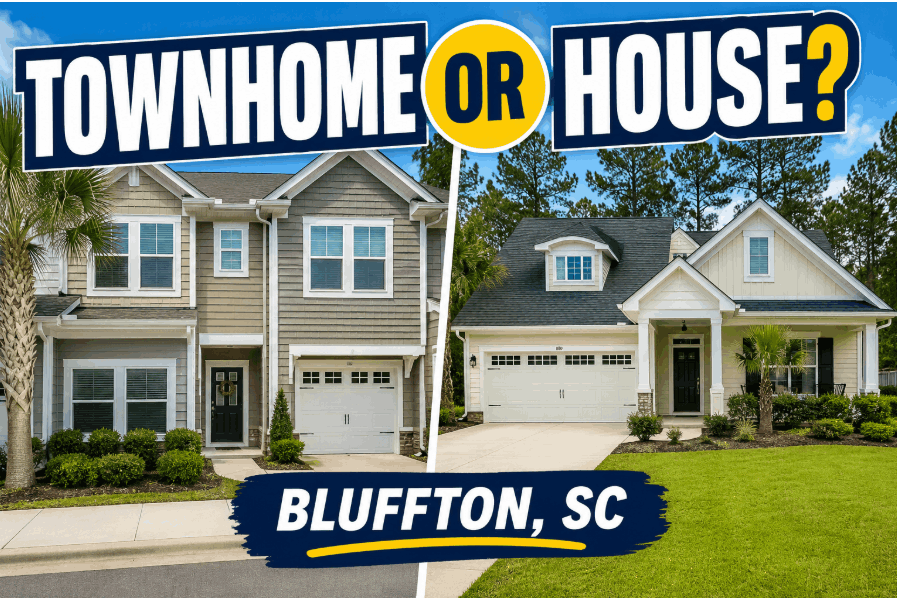 Frequently Asked Questions About Bluffton Townhomes and Single-Family Homes
Are Bluffton townhomes always cheaper than single-family homes?
No. Townhomes frequently offer a lower entry point, but Bluffton has attached properties across a wide price range. The purchase price should be compared with HOA dues, insurance, maintenance coverage, property taxes, and the buyer's remaining responsibilities. A lower-priced townhome with substantial dues may have a monthly cost close to that of a detached home.
Does a townhome HOA normally cover the roof and exterior?
It depends on the community's legal structure and governing documents. Some associations handle meaningful exterior maintenance and insurance. Others cover common areas while the owner remains responsible for the roof, siding, windows, or other structural components. The deed, covenants, master deed when applicable, budget, maintenance chart, and insurance policy should be reviewed before relying on the coverage.
Is financing a townhome harder than financing a detached home?
Not necessarily. A fee-simple townhome in a planned development may finance similarly to other residential properties. A townhome that is legally part of a condominium project may require the lender to review the project, association, insurance, assessments, owner delinquencies, and other eligibility factors. The lender should identify the legal property type early in the process.
Do single-family homes appreciate more than townhomes?
Detached homes often attract a broader buyer pool because of their privacy, land, storage, and flexibility. That does not guarantee better appreciation. Location, condition, community demand, HOA costs, floor plan, lot quality, insurance, and competing inventory can matter more than the property label.
Is a townhome a good first home?
It can be. A townhome may allow a first-time buyer to purchase at a more manageable payment and take on fewer exterior responsibilities. The buyer still needs to understand the association's financial health, restrictions, insurance, maintenance responsibilities, and future resale audience. In public buyer discussions, affordability and maintenance are recurring reasons people consider townhomes, while HOA uncertainty and shared walls are recurring concerns.
Is an end-unit townhome worth paying more for?
It may be. End units often provide additional windows, natural light, fewer shared walls, and sometimes more outdoor space. The premium should still be compared with the unit's condition, location within the community, parking, view, floor plan, and resale alternatives.
Categories
- All Blogs (108)
- Hilton Head Condo Buyer Strategy (7)
- Beach Access & Coastal Ownership (1)
- Bluffton & Lowcountry Living (2)
- Bluffton Buyer / Seller / Comparison Topics (2)
- Bluffton Communities and Relocation (4)
- Bluffton Real Estate (8)
- Bluffton Real Estate / Relocation Guide (2)
- Buyer Advice (1)
- Buyer Guides (1)
- Costs, Fees, Insurance, Financing, and Due Diligence (1)
- Golf / Private Club / Gated Community Living (1)
- Golf / Private Club Communities (1)
- Hilton Head & Bluffton Buyer Strategy (1)
- Hilton Head Area Comparisons (1)
- Hilton Head Communities (4)
- Hilton Head Communities & Area Guides (11)
- Hilton Head Condo Buyer Guide (9)
- Hilton Head Condo Market Updates (1)
- Hilton Head Condo Seller Strategy (1)
- Hilton Head Condos & Villas (14)
- Hilton Head Homes (1)
- Hilton Head Homes + Island Living (2)
- Hilton Head Homes and Island Living (1)
- Hilton Head Real Estate (1)
- Hilton Head Seller Strategy (8)
- Hilton Head Short-Term Rental + Investment Guide (1)
- Hilton Head vs Bluffton (1)
- Hilton Head vs Bluffton / Relocation (3)
- Lowcountry Homeownership (1)
- Market Reports & Trends (4)
- Relocation and Retirement (1)
- Retirement & Relocation (1)
- Retirement and 55+ Communities (1)
- Retirement and Relocation (2)
- Retirement, 55+ & Private Club Living (3)
- Seller Strategy and Valuation (1)
- Short-Term Rentals & Investment (3)
Recent Posts
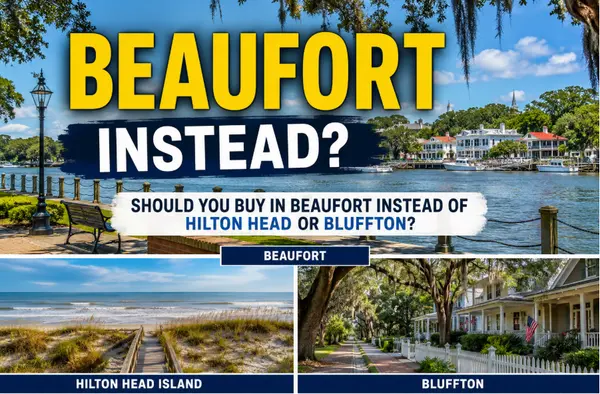
Should You Buy in Beaufort Instead of Hilton Head or Bluffton?
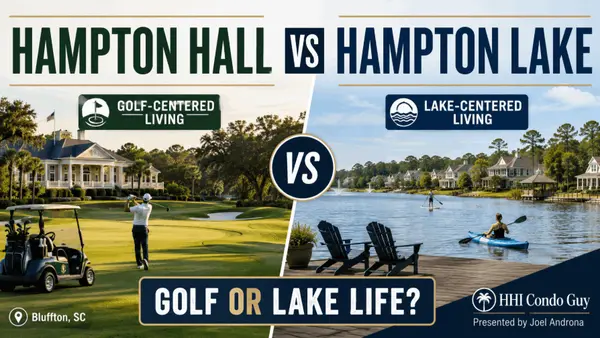
Hampton Hall vs Hampton Lake: Golf-Centered or Lake-Centered Living?
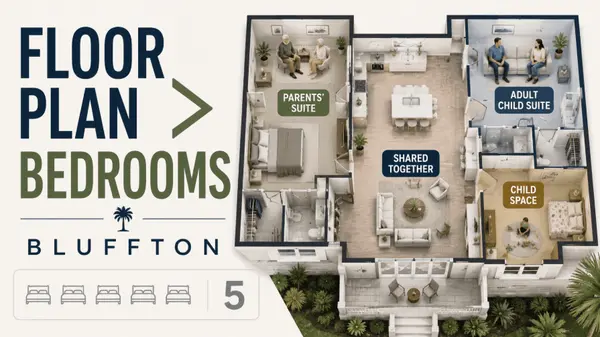
Multigenerational Living in Bluffton: The Floor Plan Matters More Than the Bedroom Count
Buying a Lowcountry Home With a Private Dock: What Buyers Need to Verify
Selling After You Move Out: Vacant, Staged, or Left Furnished?
Flood Zone, Elevation, and Insurance: Why the House Next Door Can Carry a Different Risk
Septic vs Sewer in Bluffton and the Lowcountry: What Changes for the Buyer?
Buying a Stucco Home in the Lowcountry: What Buyers Should Investigate
Private Pool vs Community Pool: What Bluffton Buyers Are Really Choosing

Buying a Golf-Course Home When You Do Not Actually Golf