Buying a Hilton Head House Near the Beach vs Inside a Residential Community
Buying a Hilton Head House Near the Beach vs Inside a Residential Community
A Hilton Head buyer can fall in love with a beach-area house before asking whether the beach will actually improve everyday life enough to justify the purchase.
The location is easy to picture. You walk or bike to the sand, friends understand immediately why you bought there, and the house feels connected to the version of Hilton Head people imagine before they arrive.
A residential community can be harder to appreciate from listing photos. The advantages may be quieter roads, controlled access, larger lots, garage space, private amenities, stronger neighborhood continuity, or a setting designed more around owners than weekly visitors.
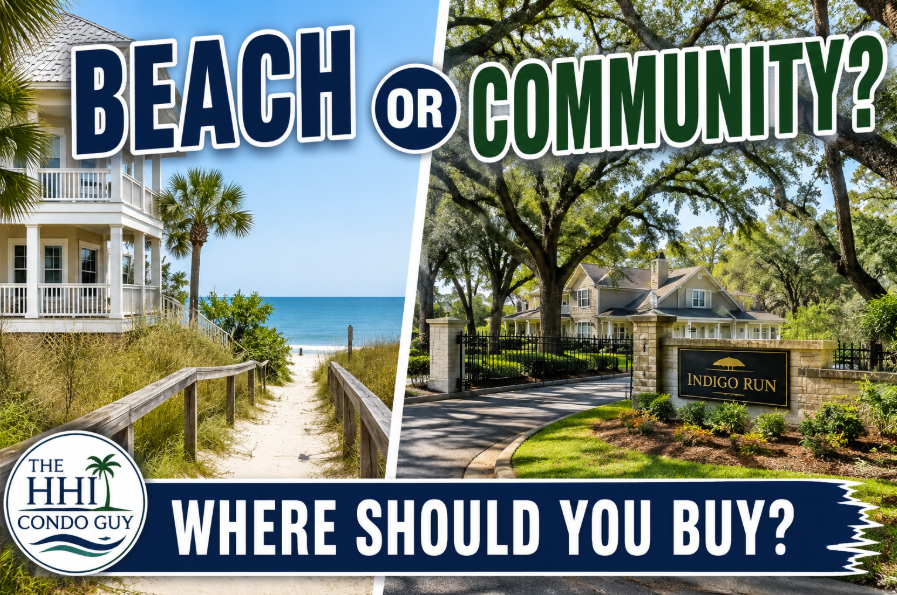
Neither choice is automatically better. The stronger purchase is the one that gives you the benefits you will use without forcing you to overpay for benefits you mainly like in theory.
That is why I would not compare these homes only by distance from the ocean. I would compare how the two properties will work when you live in them, maintain them, insure them, entertain guests, follow the community rules, and eventually put them back on the market.
Buyers can start by reviewing HILTON HEAD ISLAND HOMES in both settings, but the comparison has to go deeper than the map.
The Decision Is Not Always Beach Versus Community
Hilton Head does not divide cleanly into beach neighborhoods on one side and residential communities on the other.
Sea Pines, for example, includes single-family residences, vacation rentals, commercial areas, resort facilities, marinas, recreation, and miles of beach access within one managed community. Port Royal Plantation presents another version of the overlap: an oceanfront residential setting with controlled access and owner-focused amenities.
That matters because the community name alone does not tell you whether the house will feel quiet, busy, residential, rental-oriented, convenient to the beach, or isolated from the places you visit most.
One Sea Pines house may be close enough to bike to the beach and Harbour Town. Another may sit deeper inside the community and feel more like a private residential home. A house outside a major gated community may be close to the Atlantic but surrounded by more vacation traffic and less neighborhood control.
The useful comparison is not gate versus no gate. It is what controls your daily experience once you leave the driveway.
What You Are Really Paying For Near the Beach
A beach-area premium only makes sense when the access is genuinely useful.
"Near the beach" may mean a short walk with no major road crossing. It may mean a manageable bike ride. It may also mean loading chairs and coolers into a car because the route is farther or less practical than the listing made it appear.
That difference matters. Easy access can change how often an owner uses the beach. A complicated route can turn a major selling point into something that happens only when guests visit.
Before paying more for the location, walk the route from the front door to the sand. Do it carrying what you would normally bring. Look at traffic, pathway conditions, crossings, lighting, parking, and whether the route still feels convenient in summer heat or after a long day.
A map measures distance. It does not measure friction.
Beach proximity can also change the surroundings.
Some buyers enjoy the energy that comes with vacation homes, rental guests, bicycles, beach traffic, and seasonal activity. Other buyers discover that they wanted access to the beach without wanting their immediate neighborhood to feel like part of the visitor economy.
The answer can change street by street. A house near Forest Beach may offer a different rhythm from a house inside Sea Pines, even when both provide convenient Atlantic access.
A buyer should visit during the day, in the evening, on a weekend, and during a busier season when possible. A quiet showing on a weekday morning may not reveal how the area normally feels when the island is full.
The purchase may also require a compromise in the house itself.
At the same budget, buyers may have to choose between stronger beach proximity and a larger, newer, or more renovated home elsewhere on the island. The beach-area option may offer the better location but less garage space, a smaller lot, an older roof, more exterior exposure, or a layout that does not work as well for full-time living.
That does not make the beach house a bad purchase. It means the location has to earn the compromises.
Do not pay for a five-minute beach walk and then spend most of your time frustrated by the house.
What Changes Inside a Residential Community
A community such as Indigo Run, Hilton Head Plantation, Long Cove, or Wexford can shift the purchase away from beach convenience and toward the environment surrounding the home.
Indigo Run identifies itself as a gated Hilton Head community with multiple controlled entrances, extensive internal roads, residential neighborhoods, and around-the-clock security operations. Long Cove and Wexford tie property ownership more directly to private-club facilities and community infrastructure. The structures and costs are not interchangeable, which is why the exact association and membership documents matter more than the general phrase "gated community."
The benefit may be a more predictable residential atmosphere. The tradeoff may be annual assessments, club dues, initiation charges, architectural review, gate procedures, guest rules, vehicle restrictions, or limitations on how the home can be rented.
Those costs should not be treated as a penalty automatically. They may fund roads, security, landscaping, recreation, drainage, common property, staffing, private facilities, or club operations that the owner values.
The question is whether you will use what you are required to pay for.
Residential-community ownership also does not mean abandoning the beach.
Hilton Head maintains public beach parks, and qualifying island residents can obtain annual resident beach parking permits for designated spaces and avoid metered charges at Town beach parks. That gives owners across the island a practical way to reach the Atlantic even when their house is not within walking distance.
The experience is different, however.
Walking to the beach allows you to go for twenty minutes without planning the day around it. Driving from a residential community means checking traffic, finding parking, packing the car, and carrying everything from the lot.
A buyer who goes to the beach twice every summer may not need to pay heavily for proximity. A buyer who wants a morning walk on the sand several times a week probably should treat access as a serious priority.
Some Communities Give You Both—At a Price
The hardest comparison is often between a near-beach house outside a major community and a house inside a community that also has meaningful beach access.
SEA PINES HOMES can provide community management, leisure trails, beach access paths, residential areas, visitor activity, resort facilities, and recognizable island destinations within the same gates. The combination is valuable precisely because the buyer may not have to choose completely between the beach and a managed community.
But overlap does not eliminate tradeoffs.
A Sea Pines buyer still has to compare the exact distance to the beach, traffic patterns, rental activity, gate access, property condition, annual obligations, nearby commercial activity, and whether the house is priced mainly for the address.
Port Royal offers a more residential version of oceanfront community ownership. Other island communities may give residents access to marshes, Broad Creek, Port Royal Sound, golf, boating, recreation, or private social facilities without placing the home near an Atlantic swimming beach.
The point is not to decide which community has the longest amenity list. It is to identify which access, setting, and ownership structure you will actually use.
Beach Proximity Does Not Replace Property-Level Risk Review
It is easy to assume that the closer house carries more coastal risk and the interior-community house carries less. The exact answer depends on the property.
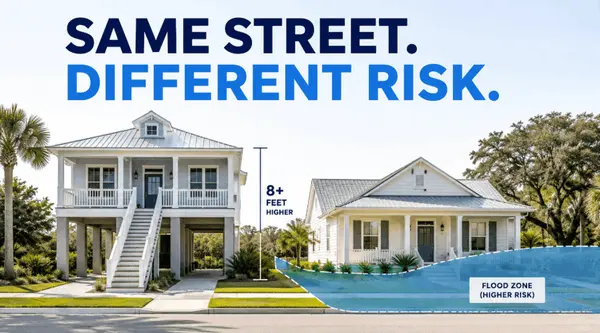
Hilton Head's official flood information distinguishes several flood-zone classifications, and both the Town and FEMA provide address-level mapping tools. Standard homeowner insurance does not cover flood losses, so insurance availability, flood coverage, elevation information, construction, drainage, wind coverage, and the home's loss history should be reviewed for the specific address.
Distance from the ocean is one part of the analysis. It is not the analysis.
A house farther inland may still sit in a higher-risk area. A near-beach house may have elevation, construction, roofing, shutters, drainage, or improvements that make it more manageable than a buyer expected.
The best comparison uses actual insurance quotes and property records rather than assumptions based on the neighborhood name.
Maintenance deserves the same property-level review.
A buyer should understand the age and condition of the roof, exterior siding, windows, doors, HVAC equipment, decks, railings, landscaping, drainage, pool equipment, and any elevated structural components. Salt, wind, moisture, sun, trees, and storm preparation can affect homes throughout the island, although exposure varies by location and construction.
A more expensive beach house with newer systems may be easier to own than a cheaper residential house with several major replacements approaching. The opposite can also be true.
The purchase price tells you what it costs to acquire the house. The condition tells you what it may cost to keep it.
Rental Plans Can Change the Entire Comparison
A buyer planning to use the home only as a primary residence should evaluate these options differently from someone who wants rental income.
Hilton Head requires a separate short-term-rental permit for each property offered as a short-term rental. The permit is property-specific, nontransferable, and separate from the Town business-license requirement. Community covenants can impose additional restrictions, including minimum lease terms or prohibitions that are stricter than the Town's general requirements.
That means a buyer cannot assume that every near-beach house can be rented weekly or that every gated-community house must remain owner-occupied.
The governing documents, Town requirements, existing rental history, parking capacity, bedroom count, occupancy limits, management costs, insurance, and neighborhood rules all have to agree with the plan.
A house can be close to the beach and still be a weak rental purchase. A house can also be farther away and work well as a long-term residence or second home because the owner values privacy, space, and community structure more than nightly demand.
Do not let the word "beach" do the financial analysis for you.
Full-Time Buyers and Second-Home Buyers Often Choose Differently
A full-time buyer usually notices details that a vacation buyer can overlook.
Garage space, storage, pantry size, driveway capacity, office space, daily errands, traffic, neighborhood continuity, yard maintenance, guest access, and how the home functions in January can matter more than being able to walk to the beach during one summer week.
That is one reason HILTON HEAD PLANTATION HOMES often enter the conversation for buyers seeking an owner-oriented island setting. The community offers internal recreation and access to the Port Royal Sound side of the island, but it should not be presented as the same experience as owning near an Atlantic beach. The distinction matters to buyers whose main goal is surf-beach access.
A second-home buyer may reverse those priorities. The owner may tolerate a smaller garage or a busier area because the house places family and guests close to the activity they came to Hilton Head to enjoy.
The strongest decision depends on the home's intended use, not on which location sounds more impressive.
 How I Would Compare Two Actual Houses
How Often Will You Use the Beach?
Be honest about your routine.
A buyer who wants to walk the beach most mornings should calculate the value of that access differently from someone who mainly wants the option available for visiting family.
Paying for proximity can be worthwhile when it repeatedly improves daily life. It is harder to justify when the beach becomes a backdrop rather than part of the routine.
What Are You Giving Up for the Location?
Compare the actual houses side by side.
Look at condition, square footage, lot, privacy, pool, garage, storage, renovation quality, floor plan, outdoor space, stairs, storm features, and upcoming capital expenses.
A buyer should know exactly which advantages disappear when more of the budget goes toward the address.
What Are the Mandatory Ownership Costs?
Add more than the mortgage payment.
Compare property taxes, insurance, flood coverage, POA or HOA assessments, club dues, initiation or transfer charges, landscaping, pool service, pest control, security, storm preparation, and expected maintenance.
A community house with higher dues may still cost less to own than a near-beach house requiring substantial private maintenance. A lower-fee house may become more expensive once every responsibility is placed directly on the owner.
What Kind of Activity Do You Want Around the House?
Some buyers like being able to walk into a busier beach district. Others prefer coming home to quieter internal roads and a neighborhood where most people are owners or longer-term residents.
Neither preference is wrong.
The mistake is buying a location for its convenience while resenting the activity that creates that convenience.
Who Is Likely to Buy the House From You Later?
A near-beach house may attract second-home buyers, vacation buyers, or rental-oriented buyers when the property and rules support those uses.
A residential-community house may appeal more strongly to full-time residents, retirees, golfers, boaters, private-club buyers, or owners seeking a controlled neighborhood setting.
Resale strength depends on how convincingly the property serves its likely buyer. A beach address cannot cover up poor condition or awkward access. A private-community address cannot cover up excessive costs or a house that falls behind its competition.
The Better Hilton Head Purchase Is the One You Will Use Properly
Buyers often think the emotional choice is the beach house and the practical choice is the residential community.
That is too simple.
A beach-area house can be practical when access is central to the owner's routine and the property works financially. A residential-community house can be an emotional purchase when the buyer loves the privacy, golf, boating, social life, views, or neighborhood atmosphere.
The better house is the one whose strongest advantages match the way you plan to live.
Pay for the beach when the beach will change your life on the island. Pay for the community when the community will shape the life you want more than the ocean will.
Then make sure the house itself earns the price.
Message me if you want help comparing the actual Hilton Head houses, community obligations, beach routes, insurance considerations, and ownership tradeoffs before you decide.
Frequently Asked Questions
Is a Hilton Head house near the beach always better for resale?
No. Beach proximity can create strong demand, but resale still depends on condition, access, layout, insurance, flood profile, rental rules, parking, ownership costs, privacy, and how the property compares with competing homes. Buyers may pay for the location, but they still expect the house to justify the total price.
Can I short-term rent a house inside a Hilton Head residential community?
It depends on the specific community and property. Hilton Head requires a property-specific short-term-rental permit, but an HOA, POA, club, or covenant may impose additional restrictions or prohibit short-term rentals. Both the Town requirements and governing documents should be confirmed before relying on rental income.
Do Hilton Head residents have access to public beaches?
Yes. The Town operates public beach parks, and qualifying Hilton Head residents can obtain annual resident beach parking permits for designated spaces. Living inside a residential community does not prevent an owner from using the Atlantic beach, although driving and parking create a different experience from walking or biking from home.
Does every gated community on Hilton Head include club membership?
No. The structure varies considerably. Some communities have standard POA assessments, some have optional clubs, and others tie ownership to mandatory private-club membership, initiation charges, or substantial annual dues. Buyers should review the exact fee schedule, governing documents, and membership requirements for the property.
What should I verify before buying a house near the beach?
Verify the actual beach route, flood zone, elevation information when available, homeowner and flood insurance, wind coverage, rental rules, parking, property condition, storm features, maintenance history, drainage, and nearby activity. The exact address matters more than the general beach-area label.
Categories
- All Blogs (108)
- Hilton Head Condo Buyer Strategy (7)
- Beach Access & Coastal Ownership (1)
- Bluffton & Lowcountry Living (2)
- Bluffton Buyer / Seller / Comparison Topics (2)
- Bluffton Communities and Relocation (4)
- Bluffton Real Estate (8)
- Bluffton Real Estate / Relocation Guide (2)
- Buyer Advice (1)
- Buyer Guides (1)
- Costs, Fees, Insurance, Financing, and Due Diligence (1)
- Golf / Private Club / Gated Community Living (1)
- Golf / Private Club Communities (1)
- Hilton Head & Bluffton Buyer Strategy (1)
- Hilton Head Area Comparisons (1)
- Hilton Head Communities (4)
- Hilton Head Communities & Area Guides (11)
- Hilton Head Condo Buyer Guide (9)
- Hilton Head Condo Market Updates (1)
- Hilton Head Condo Seller Strategy (1)
- Hilton Head Condos & Villas (14)
- Hilton Head Homes (1)
- Hilton Head Homes + Island Living (2)
- Hilton Head Homes and Island Living (1)
- Hilton Head Real Estate (1)
- Hilton Head Seller Strategy (8)
- Hilton Head Short-Term Rental + Investment Guide (1)
- Hilton Head vs Bluffton (1)
- Hilton Head vs Bluffton / Relocation (3)
- Lowcountry Homeownership (1)
- Market Reports & Trends (4)
- Relocation and Retirement (1)
- Retirement & Relocation (1)
- Retirement and 55+ Communities (1)
- Retirement and Relocation (2)
- Retirement, 55+ & Private Club Living (3)
- Seller Strategy and Valuation (1)
- Short-Term Rentals & Investment (3)
Recent Posts