Buying an Established Bluffton Home vs Building New
Buying an Established Bluffton Home vs Building New
A lot of Bluffton buyers use "new construction" as though it describes one simple option. It does not.
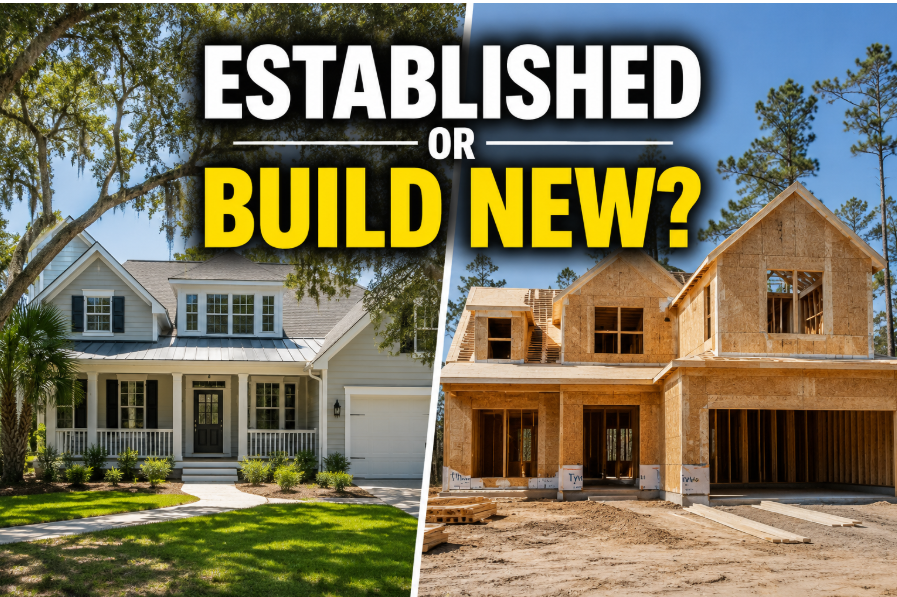
A completed quick-move-in home, a house already halfway through construction, a production home selected from a builder's floor plans, and a fully custom home are four different purchases. The farther the home is from completion, the more the buyer has to make decisions based on drawings, estimated timelines, sample finishes, development plans, and promises about what the neighborhood will eventually become.
An established home works differently. The buyer can stand in the actual backyard, drive the streets at different times, see the mature landscaping, inspect the finished home, understand the neighboring properties, and evaluate the community as it exists today.
An established home lets you buy facts. Building new asks you to buy a plan.
Neither approach is automatically better. The decision depends on how much control the buyer wants, how much uncertainty the buyer can carry, and whether the location, timeline, budget, and finished result justify the tradeoffs.
A Quick Move-In Home Is Not the Same as Building New
The first step is separating a true build from a never-lived-in home that is already complete or close to completion.
With a quick move-in home, many important decisions have already been made. The lot has been selected. The house is positioned. The framing is complete or substantially underway. The finishes may already be ordered. The completion window is usually easier to estimate, and the buyer can often see more of the exact home before committing.
Building from an earlier stage gives the buyer more control, but it also adds more uncertainty. The buyer may select the floor plan, elevation, structural options, design package, lot, garage configuration, screened porch, office, storage, or other upgrades. Those choices can make the finished home work better, but every additional choice can affect the price and timeline.
A model home shows what the builder can create. It does not show exactly how the buyer's house will sit on its lot, what will be included at the contracted price, or how the surrounding neighborhood will feel when construction is complete.
That distinction matters. A buyer who likes the idea of something new may actually be happiest with a completed quick move-in. A buyer who wants substantial control over the home may be willing to accept the longer process of starting earlier.
An Established Home Gives You More Evidence Before You Commit
One of the strongest advantages of an established Bluffton home is that the buyer can evaluate the finished result rather than imagining it.
The buyer can see how much afternoon sun reaches the backyard, whether the screened porch gets road noise, how close the neighboring houses feel, whether water appears to collect after heavy rain, how much shade the trees provide, and whether the garage, driveway, storage, and outdoor space actually work.
The community is also easier to understand. Amenities are either complete or they are not. Traffic patterns have developed. Landscaping has grown in. The HOA has an operating history. Buyers can see how owners maintain their homes, how parking is handled, and whether the neighborhood feels different on a normal weekday than it did during a scheduled showing.
None of that guarantees the home is the right purchase. An established property can still have deferred maintenance, dated systems, an aging roof, older HVAC equipment, drainage concerns, or renovations that were completed poorly.
The advantage is visibility. The problems may exist, but the buyer has a better chance of identifying them before closing.
Building New Gives You Control Over Decisions That Are Expensive to Change Later
The strongest argument for building new is not simply that the home has never been occupied. It is that the buyer may be able to control parts of the house that would be difficult or expensive to correct later.
Floor-plan decisions matter more than paint colors. The placement of the primary bedroom, width of the garage, ceiling heights, number of bathrooms, office location, kitchen layout, storage, electrical outlets, doors, windows, screened outdoor space, and structural options can affect daily life for years.
An established home may have the better lot or location but the wrong floor plan. Moving walls, expanding a garage, adding a bathroom, or correcting poor storage can be far more complicated than changing countertops or replacing flooring.
Building new can make sense when a buyer has already looked at enough established homes to know that the recurring problem is structural rather than cosmetic.
New does not automatically mean better. It means the buyer may have more influence over the parts of the house that are hardest to change.
The Starting Price Is Only One Part of the Building Budget
Building new creates more opportunities for the final price to move.
A buyer may begin with a floor-plan price and then add a homesite premium, structural choices, an upgraded elevation, additional electrical work, flooring, cabinets, countertops, appliances, bathroom finishes, screened outdoor space, garage improvements, landscaping, or other selections.
Some builders make the included features and total pricing relatively clear. Other situations require the buyer to understand exactly what is standard, what is an upgrade, and what may need to be added after closing.
The danger is not one enormous upgrade. It is a long sequence of smaller decisions that gradually moves the home away from the original budget.
An established home may need work too, but the buyer can usually price those projects against a finished property. The refrigerator, blinds, fence, patio, landscaping, lighting, storage, and other improvements may already be present. Even when the buyer plans to replace some of them, they do not all have to be completed immediately.
The cheapest decision on paper can become the most expensive once construction choices, after-closing work, and timing costs are included.
Builder Incentives Need to Be Compared With the Exact Home
Builder incentives can materially improve a purchase, especially when they reduce the buyer's cash requirement or monthly payment. The advertised offer, however, may apply only to selected homes, financing through an affiliated lender, particular loan programs, qualifying credit profiles, or contracts and closings completed by specific deadlines.
The strongest incentive may also be attached to a quick-move-in home the builder wants to sell rather than the to-be-built home the buyer wants to design.
That does not make the incentive weak. It means the buyer should compare the complete transaction.
Compare MORTGAGE OPTIONS using the same down payment, estimated taxes, insurance, HOA costs, loan type, rate structure, discount points, closing expenses, and expected time in the home. A lower advertised rate can be valuable, but the purchase price and long-term loan terms still matter.
Construction Time Has a Financial Cost
Buyers often think about the build timeline as a matter of patience. It can also affect the budget.
A delayed completion can mean additional rent, storage costs, an extended temporary-living arrangement, a more complicated home sale, another rate-lock decision, or uncertainty around a job relocation. A buyer selling another property may have to choose between closing early and moving twice or trying to coordinate two transactions around a construction schedule that can still change.
An established home usually offers a more defined path. The buyer can inspect the property, complete financing, negotiate issues, and work toward a closing date based on a home that already exists.
Building new can still be the right decision for a buyer with flexibility. It becomes harder when the move date controls everything else.
Time should be treated as part of the purchase price, even when it does not appear on the builder's contract.
A New Home Still Needs Independent Due Diligence
Brand-new construction can feel safer because the home has new systems, current materials, inspections during construction, and some form of builder warranty. None of those things eliminate the need for the buyer to pay attention.
New homes are still assembled by people, subcontractors, and suppliers working across multiple homes and deadlines. Cosmetic items, drainage, grading, roofing details, insulation, mechanical systems, doors, windows, electrical work, plumbing, and finish quality should not be accepted solely because the home is new.
The buyer should understand what independent inspection access the contract allows, whether an inspection can occur before drywall when applicable, what can be inspected before closing, how punch-list items are documented, and how warranty requests are submitted after ownership begins.
An established home needs a different type of scrutiny. The inspection should help the buyer understand current condition, system ages, previous repairs, moisture or drainage concerns, and what may need attention during the first several years.
New construction replaces some age-related risk with construction-process risk. It does not eliminate risk.
You Are Also Choosing the Community's Stage of Development
When a buyer builds in an active Bluffton development, the purchase includes more than the house.
The buyer may be committing to future phases, ongoing construction traffic, unfinished nearby homesites, amenity schedules, evolving landscaping, and a neighborhood that may look different several years later. The builder may continue releasing homes and adjusting prices or incentives after the buyer closes.
That can be a positive experience for someone who wants a newer community and is comfortable watching it develop. It may be less appealing to a buyer who wants quiet streets, mature trees, completed amenities, and fewer questions about what will be built nearby.
An established neighborhood offers more certainty, but it can come with older infrastructure, aging amenities, stricter architectural patterns, or homes that need renovation.
The age of the neighborhood is not the deciding factor. The important issue is whether the buyer prefers a community that is still becoming something or one that can already be judged as it stands.
Lot Quality Can Outlast Interior Finishes
Model-home finishes receive most of the attention during a builder visit, but the lot can have a larger effect on long-term satisfaction.
The buyer should think about the home's position, neighboring houses, road exposure, future construction, backyard depth, drainage, trees, privacy, sunlight, driveway slope, utility equipment, and what sits behind the homesite.
A buyer can change flooring. Moving the house farther from the road is not an option after construction begins.
Established Bluffton homes may offer mature trees, natural buffers, larger earlier-phase homesites, established outdoor improvements, or a setting that is difficult to reproduce in a newer section. New construction may offer a cleaner site, modern drainage design, and the opportunity to choose from available homesites, but desirable lots may carry additional premiums.
A beautiful interior can get a buyer excited during the appointment. The lot controls part of the experience every day afterward.
Do Not Rely on the Current Tax Bill Alone
Property taxes deserve a separate estimate for either choice.
An established home's current tax history may reflect the seller's ownership, assessment value, exemptions, or classification. A sale can lead to a new appraisal, and a buyer planning to use the property as a primary residence must apply for the applicable legal-residence treatment.
A new build may initially show tax information connected to the land or incomplete construction rather than the finished home. Beaufort County also reassesses property following the completion of new construction.
The comparison should be based on the expected completed value and the buyer's intended use, not only the tax number shown on a current listing, builder worksheet, or vacant homesite.
An Established Home Usually Works Better for Buyers Who Want Certainty
An established Bluffton home often makes more sense for a buyer who wants to move on a defined schedule, inspect the exact property, understand the neighborhood immediately, avoid a long sequence of design decisions, and see what improvements are already included.
It may also be the stronger option when the location, lot, landscaping, privacy, garage, outdoor area, or community maturity would be difficult to duplicate with new construction.
The buyer must still price future maintenance honestly. A finished neighborhood does not compensate for a roof, HVAC system, plumbing issue, dated interior, or deferred exterior work that makes the home too expensive after closing.
Established should not be confused with problem-free. Its main advantage is that more of the answer is already visible.
Building New Usually Works Better for Buyers Who Value Control
Building new often makes more sense for a buyer who has flexibility, wants a specific floor plan, values newer systems, prefers current design choices, and is prepared to make a large number of decisions without losing control of the budget.
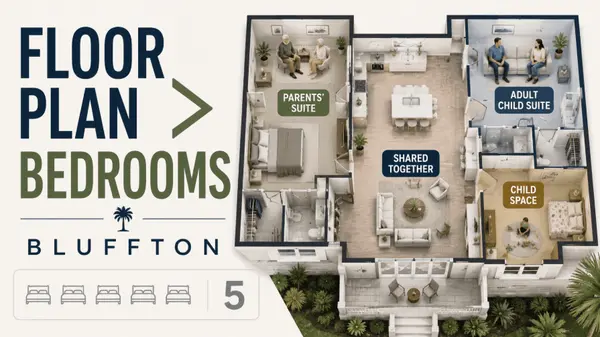
It can also solve problems that keep appearing in resale homes. A buyer who repeatedly finds inadequate garages, poor storage, closed-off kitchens, small primary bathrooms, or layouts that do not support work-from-home or multi-generational needs may benefit from choosing those elements earlier.
The buyer should be comfortable with construction uncertainty, builder-contract terms, community development, inspection access, completion timing, and the possibility that the final neighborhood will take time to mature.
Building new gives the buyer more control over the house. It does not give the buyer complete control over construction timing, future inventory, interest rates, or the development surrounding the home.
Compare Actual Homes, Not General Categories
The best way to make this decision is to compare specific opportunities.
Start with the current BLUFFTON HOMES FOR SALE across established communities, completed new homes, quick-move-in inventory, and active builder neighborhoods. Compare the finished monthly cost, cash needed before and after closing, timeline, lot, location, inspection findings, HOA structure, tax estimate, warranty, expected maintenance, and future resale competition.
A PERSONALIZED HOME SEARCH should place those options beside one another instead of separating builder homes from resale listings and comparing them at different times.
A strong established home may beat a mediocre build. A well-positioned new home may beat an established property that requires too much work. The answer becomes clearer when the buyer compares two actual homes and two actual financial outcomes.
The Bottom Line
Buying an established Bluffton home gives the buyer more evidence. Building new gives the buyer more control.
The established home shows its location, lot, neighborhood, condition, improvements, and daily environment before the buyer commits. The build allows the buyer to influence the floor plan and finishes, but it requires decisions based on estimates, plans, contracts, timelines, and a neighborhood that may still be developing.
Do not choose the established home only because it feels safer. Do not build new only because the model home looks better.
Compare the exact location, finished cost, construction or repair risk, move timing, lot, community stage, monthly payment, and how the home will work after the excitement of the purchase wears off.
The better home is the one whose tradeoffs make sense for the buyer's budget, timeline, and daily life.
Message me if you are comparing an established Bluffton home with a new build and want help evaluating the actual properties rather than choosing by age alone.
 Frequently Asked Questions About Buying an Established Bluffton Home vs Building New
Is a quick-move-in home the same as building new?
No. A quick-move-in home is already complete or under construction, so the buyer usually has less control over structural options and finishes but more certainty about the exact home and completion timing. A true to-be-built home begins earlier in the process and usually involves more choices, a longer timeline, and more construction uncertainty.
Is building a new home in Bluffton always more expensive?
Not necessarily. The answer depends on the floor plan, homesite, upgrades, incentive package, financing, HOA costs, and what the buyer would need to repair or renovate in an established home. Compare the completed new-build cost against the established home's purchase price plus realistic near-term improvements.
Do builder incentives apply to every new home?
No. Incentives may be limited to selected inventory, quick-move-in homes, qualifying buyers, particular lenders or loan programs, and contracts or closings completed by specific deadlines. The written terms should be reviewed before the incentive is treated as part of the buyer's budget.
Should a buyer inspect a brand-new home?
Yes. Buyers should ask what independent inspection access is allowed during construction and before closing. A new home can still have construction defects, incomplete work, grading concerns, or punch-list items that should be documented and corrected.
Will property taxes change after buying or completing a new home?
They may. Beaufort County reassesses property following a qualifying ownership transfer or completed new construction. The buyer's intended use also matters because a qualifying primary residence may receive the 4% assessment ratio, while other residential property is generally assessed at 6%. Buyers should estimate taxes based on the completed home and their expected classification.
Which option is better for a buyer relocating to Bluffton?
An established home or completed quick-move-in may work better when the buyer needs a reliable closing date. Building new may work when the buyer has flexibility and values floor-plan control enough to accept the construction process. The buyer's job timing, current lease or home sale, temporary housing options, and financing should be considered before choosing.
Categories
- All Blogs (108)
- Hilton Head Condo Buyer Strategy (7)
- Beach Access & Coastal Ownership (1)
- Bluffton & Lowcountry Living (2)
- Bluffton Buyer / Seller / Comparison Topics (2)
- Bluffton Communities and Relocation (4)
- Bluffton Real Estate (8)
- Bluffton Real Estate / Relocation Guide (2)
- Buyer Advice (1)
- Buyer Guides (1)
- Costs, Fees, Insurance, Financing, and Due Diligence (1)
- Golf / Private Club / Gated Community Living (1)
- Golf / Private Club Communities (1)
- Hilton Head & Bluffton Buyer Strategy (1)
- Hilton Head Area Comparisons (1)
- Hilton Head Communities (4)
- Hilton Head Communities & Area Guides (11)
- Hilton Head Condo Buyer Guide (9)
- Hilton Head Condo Market Updates (1)
- Hilton Head Condo Seller Strategy (1)
- Hilton Head Condos & Villas (14)
- Hilton Head Homes (1)
- Hilton Head Homes + Island Living (2)
- Hilton Head Homes and Island Living (1)
- Hilton Head Real Estate (1)
- Hilton Head Seller Strategy (8)
- Hilton Head Short-Term Rental + Investment Guide (1)
- Hilton Head vs Bluffton (1)
- Hilton Head vs Bluffton / Relocation (3)
- Lowcountry Homeownership (1)
- Market Reports & Trends (4)
- Relocation and Retirement (1)
- Retirement & Relocation (1)
- Retirement and 55+ Communities (1)
- Retirement and Relocation (2)
- Retirement, 55+ & Private Club Living (3)
- Seller Strategy and Valuation (1)
- Short-Term Rentals & Investment (3)
Recent Posts