
Buying in Bluffton When You Work on Hilton Head
Buying in Bluffton When You Work on Hilton Head
The mistake is treating "Bluffton to Hilton Head" like one commute.
It is not.
A house near Old Town Bluffton and a house near New Riverside may both have a Bluffton address, but they can create very different workdays. The same is true on
Hilton Head. Working near the north end is not the same drive as working near Shelter Cove, Coligny, Forest Beach, or Sea Pines.
The useful comparison is not the distance from Bluffton to the Hilton Head bridge. It is the full trip from your driveway to your actual workplace at the time you will normally travel.
That distinction can change which Bluffton home makes sense.
The Bridge Is Only One Part of the Commute
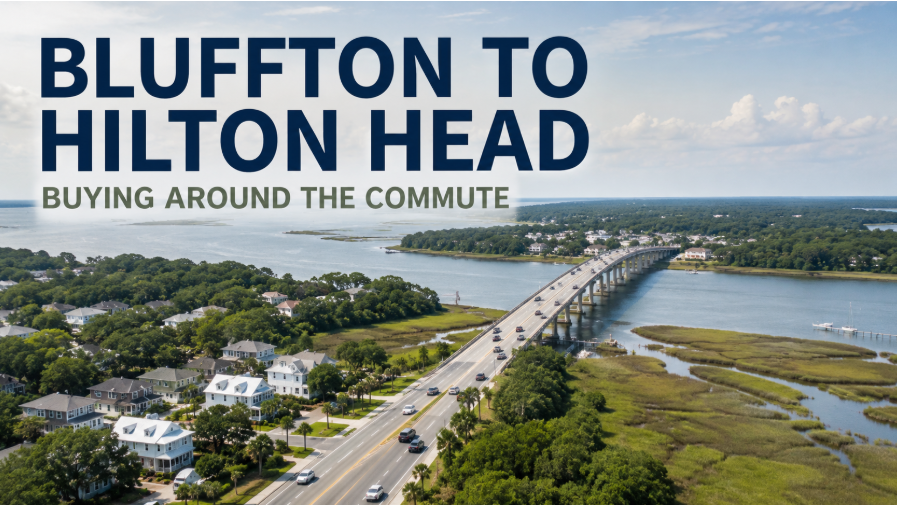
Most normal road traffic entering Hilton Head funnels through the U.S. 278 gateway corridor and the bridges over Mackay and Skull creeks. Official transportation analysis identifies the heavier weekday travel periods along the corridor as approximately 7:00 to 10:00 in the morning and 3:00 to 6:00 in the afternoon.
That does not mean every drive during those hours will be terrible. It means the commute has more variables than the mileage suggests.
You have to get out of your neighborhood, reach U.S. 278 or Bluffton Parkway, merge with island-bound traffic, cross the bridges, and then continue to your workplace. An accident, school traffic, construction, visitor traffic, or one difficult intersection can change the trip quickly.
The bridge gets most of the attention, but your neighborhood exit and your final five miles on Hilton Head may affect your day just as much.
Start With the Exact Location of Your Job
Someone working near Hilton Head Hospital, Matthews Drive, Spanish Wells Road, or another north-end location has a different decision from someone commuting to Sea Pines or the south end.
Once you cross the bridge, a north-end job may be relatively close. A mid-island job adds another section of William Hilton Parkway. A south-end job may require a longer trip through the island or use of the Cross Island Parkway before you reach work.
That difference needs to be considered before you start comparing floor plans and countertops.
A buyer working on the north end may be comfortable looking farther into Bluffton. Someone working deep into the south end five or six days a week may place much more value on being close to the bridge—or may eventually decide that living on the island is worth the housing tradeoff.
A larger home can feel smaller once an extra hour disappears into the road every day.
East Bluffton Usually Deserves the First Look
For buyers who expect to commute to Hilton Head regularly, eastern Bluffton generally deserves serious consideration first.
This includes locations with practical access to U.S. 278, the eastern portion of Bluffton Parkway, Bluffton Road, Burnt Church Road, Simmonsville Road, and the areas around Old Town. The exact answer still depends on the neighborhood entrance and the route, but these locations typically put you closer to the island side of
Bluffton than communities farther west or south.
Bluffton Parkway is officially treated as an alternate route to U.S. 278 and connects the SC 170 side of Bluffton toward Hilton Head. That can give commuters more than one way to approach the bridge corridor, although the available routes eventually meet the same island gateway.
Buyers should not assume every east-Bluffton neighborhood is automatically convenient. Some homes may be geographically close to Hilton Head but require slower local roads or difficult turns before reaching the main corridor.
The goal is not simply to buy east of a certain line. The goal is to find a route with the least unnecessary friction.
You can begin by comparing available BLUFFTON HOMES, but every promising property should also be evaluated by its actual drive to work.
Old Town Can Work Well, but Do Not Buy It Only for the Address
Old Town Bluffton can be appealing for someone who works on Hilton Head because it combines access toward the island with restaurants, local businesses, the May River area, and a stronger sense of place than many newer suburban developments.
The tradeoff is that the housing selection is different. Depending on the exact location, buyers may find older homes, smaller lots, infill construction, townhomes, or homes at a higher price than options farther from Old Town.
A buyer who likes spending time in Old Town may see that as a benefit beyond the commute. A buyer who mainly wants the largest newer home possible may find better options elsewhere.
Do not pay an Old Town premium only because it appears close to Hilton Head on a map. Pay it when the location also improves the way you want to live outside of work.
Buckwalter Can Be a Reasonable Middle Ground
Buckwalter often makes sense for buyers who want Bluffton convenience without moving as far toward New Riverside or the more distant edges of the market.
The area offers access to shopping, restaurants, schools, parks, medical services, and a broad selection of residential communities. For some buyers, solving those daily needs in one part of Bluffton makes the additional drive to Hilton Head acceptable.
The commute still needs to be tested carefully. A home may be described as being "in Buckwalter," but its exact position within the area can add meaningful time before the driver reaches Bluffton Parkway or U.S. 278.
This is one of the most important Bluffton buying lessons: two homes that appear close together on a listing map can produce noticeably different routines because of subdivision size, entrance placement, traffic signals, and the direction you have to travel before joining the main road.
Buckwalter may offer a better house or more convenient errands than east Bluffton. The buyer has to decide whether that benefit is worth repeating the extra road time twice a day.
New Riverside and Farther-Out Areas Create a Bigger Tradeoff
New Riverside and the expanding areas farther south or west may offer newer communities, new construction, larger floor plans, garages, neighborhood amenities, or a different price comparison than homes closer to the island.
Those benefits can be substantial. The commute can also become a much larger part of the purchase.
Someone working a flexible schedule, commuting only a few days per week, or starting before the heavier morning traffic may be comfortable living farther out.
Someone traveling onto Hilton Head during the busiest periods every weekday may eventually resent the distance.
Do not buy the house based on the drive at 11:00 on a quiet Tuesday morning. Buy it based on the drive you will make when everybody else is making it too.
The better kitchen may win the showing. The commute is what you will experience after the excitement of moving wears off.
Your Work Schedule May Matter More Than Your Mileage
A traditional Monday-through-Friday schedule creates one traffic pattern. Resort, restaurant, healthcare, retail, golf, landscaping, public safety, and hospitality jobs may create another.
An early shift that gets you across the bridge before the weekday peak can make a farther Bluffton location more practical. A schedule that ends before the afternoon rush may do the same. A job that regularly begins or ends during the heaviest periods can make even a relatively short route feel unpredictable.
Weekend schedules deserve separate attention. Hilton Head's traffic system uses different timing plans for weekday peaks, peak-season conditions, and weekend visitor inflow and outflow because the island's traffic changes with tourism patterns.
That means a hospitality employee working summer Saturdays should not evaluate a home using only a Wednesday morning test drive.
Your workdays, start time, ending time, and busiest season should all influence where you buy.
Test the Commute Before You Write an Offer
Online directions are useful for identifying routes. They are not enough for making the purchase decision.
Drive from the neighborhood to your workplace during the actual morning period you expect to travel. Make the return trip during your normal afternoon or evening period. Repeat the test on more than one day when possible.
Pay attention to more than the total time. Notice how long it takes to leave the community. Look at the turns required to reach Bluffton Parkway or U.S. 278. See where traffic begins to slow and whether you have a reasonable alternate route.
Then ask a more personal question: would this drive still feel acceptable after a long day at work?
The right Bluffton house is not the one with the shortest estimate on a listing app. It is the one whose commute still feels manageable on a difficult Tuesday in July.
Do Not Ignore the Rest of Your Daily Life
Work is important, but the home should not be selected around the commute alone.
Consider where you will buy groceries, exercise, attend appointments, take children to school or activities, eat dinner, and spend your days off. A home that saves ten minutes on the drive to Hilton Head may create more driving everywhere else.
This is one reason Buckwalter can still work for an island employee. The commute may be longer than an east-Bluffton location, but many daily errands can be handled close to home.
Old Town may appeal to someone who values local restaurants and a more walkable center. New Riverside may appeal to someone who wants a newer home, more space, or a particular community environment.
The commute should narrow the search. It should not erase every other reason you are buying a home.
Public Transportation Exists, but the Schedule Has to Match
Palmetto Breeze operates Route 811 between the Bluffton Transfer Center and Hilton Head, with island stops extending from the bridge area toward Shelter Cove and
South Forest Beach. The service operates 362 days per year, and the current listed fare is $2.50 per trip.
That may be useful for certain workers, particularly when the route and departure times align with the job. It is not automatically a substitute for driving.
A buyer considering the bus should compare the nearest stop, departure schedule, transfers, walk at the Hilton Head end, and what happens when a work shift changes. The route can solve a real transportation problem, but only when the full schedule works.
Do Not Buy Based on Promised Bridge Improvements
The bridge corridor is the subject of an active replacement and transportation-planning process. As of 2026, the Town of Hilton Head Island and its partners were discussing replacement of the eastbound bridges and broader gateway improvements, while Beaufort County had previously projected final design beginning in 2026 and construction potentially beginning in 2028.
Infrastructure projects can change in scope, funding, and timing.
A buyer should understand the plans, but should not purchase a house assuming a future project will soon eliminate congestion. Choose a location based on the commute that exists now. Treat future improvements as a possibility, not the reason the purchase works.
When Living on Hilton Head May Be Worth Reconsidering
Bluffton will not always be the better answer.
Someone who works on the south end of Hilton Head, travels during peak periods, reports to the island five or six days per week, or places a high value on avoiding the bridge may eventually decide that living on Hilton Head is worth accepting a smaller home, an older property, a different community, or a higher purchase price.
That does not mean the island is automatically better. It means the commute has enough value to influence what you are willing to give up elsewhere.
Before making the decision, compare suitable HILTON HEAD ISLAND HOMES against the Bluffton homes you are considering. The housing differences may be significant, but so is the time you could recover every week.
The Practical Way to Choose
I would make the decision in this order: identify the exact Hilton Head work location, understand the normal work schedule, test the drive from serious Bluffton options, and then compare what each home gives you in return for the commute.
A Bluffton home can make a lot of sense for someone working on Hilton Head. Many buyers prefer Bluffton's residential choices, community options, shopping access, garages, yards, or newer construction opportunities.
The purchase becomes weaker when the buyer falls in love with the house and treats the commute as something to figure out later.
The house and the drive are part of the same decision.
Message me if you want help comparing Bluffton homes by the commute you will actually live with—not just the mileage shown online.
Joel Androna
HHI Condo Guy
 Frequently Asked Questions About Living in Bluffton and Working on Hilton Head
Is it realistic to live in Bluffton and commute to Hilton Head?
Yes. Many workers travel between Bluffton and Hilton Head, but the experience depends heavily on the Bluffton location, the workplace's position on Hilton Head, and the employee's schedule. The commute should be tested during the actual travel periods before buying.
Which part of Bluffton is most convenient for working on Hilton Head?
East Bluffton locations with practical access to U.S. 278, Bluffton Parkway, Bluffton Road, Burnt Church Road, or Simmonsville Road generally deserve the first look. The neighborhood entrance and exact route may matter more than the community's marketing address.
Can Buckwalter work for a Hilton Head commuter?
Yes. Buckwalter can offer a useful balance of housing options, shopping, services, parks, and access to Bluffton Parkway. Buyers should test the commute from the exact neighborhood because travel time can vary considerably within the broader Buckwalter area.
Should I avoid New Riverside if I work on Hilton Head?
Not automatically. New Riverside may work for buyers with flexible schedules, fewer weekly trips, or a strong preference for newer homes and communities. A fixed peak-hour commute five or six days per week makes the distance more important.
Is there a bus from Bluffton to Hilton Head?
Yes. Palmetto Breeze Route 811 connects the Bluffton Transfer Center with multiple Hilton Head stops. Buyers considering it should verify the current schedule against their work hours and account for transfers or travel between the stop and workplace.
Will the planned bridge project make the commute easier?
The corridor is being redesigned and upgraded, but project scope and construction timing can change. Buyers should base their purchase on current travel conditions rather than assuming future work will shorten the commute.
Categories
- All Blogs (108)
- Hilton Head Condo Buyer Strategy (7)
- Beach Access & Coastal Ownership (1)
- Bluffton & Lowcountry Living (2)
- Bluffton Buyer / Seller / Comparison Topics (2)
- Bluffton Communities and Relocation (4)
- Bluffton Real Estate (8)
- Bluffton Real Estate / Relocation Guide (2)
- Buyer Advice (1)
- Buyer Guides (1)
- Costs, Fees, Insurance, Financing, and Due Diligence (1)
- Golf / Private Club / Gated Community Living (1)
- Golf / Private Club Communities (1)
- Hilton Head & Bluffton Buyer Strategy (1)
- Hilton Head Area Comparisons (1)
- Hilton Head Communities (4)
- Hilton Head Communities & Area Guides (11)
- Hilton Head Condo Buyer Guide (9)
- Hilton Head Condo Market Updates (1)
- Hilton Head Condo Seller Strategy (1)
- Hilton Head Condos & Villas (14)
- Hilton Head Homes (1)
- Hilton Head Homes + Island Living (2)
- Hilton Head Homes and Island Living (1)
- Hilton Head Real Estate (1)
- Hilton Head Seller Strategy (8)
- Hilton Head Short-Term Rental + Investment Guide (1)
- Hilton Head vs Bluffton (1)
- Hilton Head vs Bluffton / Relocation (3)
- Lowcountry Homeownership (1)
- Market Reports & Trends (4)
- Relocation and Retirement (1)
- Retirement & Relocation (1)
- Retirement and 55+ Communities (1)
- Retirement and Relocation (2)
- Retirement, 55+ & Private Club Living (3)
- Seller Strategy and Valuation (1)
- Short-Term Rentals & Investment (3)
Recent Posts

Should You Buy in Beaufort Instead of Hilton Head or Bluffton?

Hampton Hall vs Hampton Lake: Golf-Centered or Lake-Centered Living?

Multigenerational Living in Bluffton: The Floor Plan Matters More Than the Bedroom Count
Buying a Lowcountry Home With a Private Dock: What Buyers Need to Verify

Selling After You Move Out: Vacant, Staged, or Left Furnished?
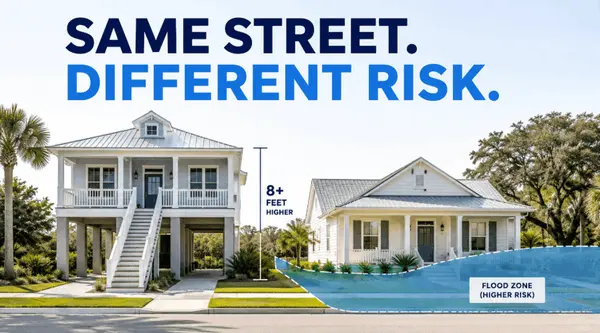
Flood Zone, Elevation, and Insurance: Why the House Next Door Can Carry a Different Risk

Septic vs Sewer in Bluffton and the Lowcountry: What Changes for the Buyer?

Buying a Stucco Home in the Lowcountry: What Buyers Should Investigate

Private Pool vs Community Pool: What Bluffton Buyers Are Really Choosing

Buying a Golf-Course Home When You Do Not Actually Golf