What Buyers Underestimate About Maintaining a Hilton Head House
What Buyers Underestimate About Maintaining a Hilton Head House
A lot of Hilton Head buyers budget for the mortgage, insurance, property taxes, community fees, landscaping, and maybe a future roof.
What they often miss is how quickly several smaller maintenance issues can connect.
A clogged gutter can put water near the foundation. Poor drainage can increase crawlspace moisture. Moisture can contribute to wood damage, pest activity, musty odors, insulation problems, and flooring movement. A few neglected tree limbs can affect the roof, gutters, insurance inspection, and storm preparation at the same time.
On Hilton Head, deferred maintenance rarely stays in one place.
That does not mean every island house is a maintenance problem. It means buyers should evaluate the house as an operating system, not as a collection of attractive rooms.
When comparing HILTON HEAD HOMES, the age of the house matters, but the maintenance history often matters more.
The Coastal Environment Does Not Stop at the Beach
Buyers sometimes assume coastal wear applies only to oceanfront or second-row homes.
Beach proximity certainly affects the amount of direct salt exposure a property receives, but every Hilton Head house exists in a warm, humid, storm-exposed coastal environment. Rain, wind-driven moisture, long cooling seasons, vegetation, drainage conditions, and outdoor exposure all influence how the property ages.
Metal components can corrode. Exterior paint and sealants can deteriorate. Fasteners, railings, light fixtures, outdoor equipment, gutters, roof penetrations, and HVAC components may need more attention than they would in a cooler or drier inland market. Salt exposure can accelerate corrosion, while moisture entering through roofs, crawlspaces, walls, or mechanical systems can contribute to mold, rot, and insect activity.
The island does not automatically make a house expensive to own. Neglect is what gets expensive.
A well-maintained house with good drainage, suitable materials, documented system care, and a proactive owner can be easier to manage than a newer house where small warning signs have been repeatedly ignored.
Moisture Is Usually the Bigger Issue Than the Buyer Expects
The most important maintenance conversation is often happening underneath, around, or behind the house.
Water should move away from the structure. Gutters need to remain clear. Downspouts need to discharge appropriately. Grading should not send water toward the foundation. Crawlspaces need to be evaluated for groundwater, plumbing leaks, condensation, damaged vapor barriers, wet insulation, humidity, mold-like growth, and wood deterioration.
The Town of Hilton Head Island advises owners to keep gutters clear, extend downspouts away from the house, maintain a yard slope that moves water away from the structure, and keep debris out of drainage areas. The Town also notes that drainage systems must remain clear because obstructions can increase local flood risk.
A crawlspace deserves more than a quick glance during an inspection.
A vapor barrier, encapsulation system, dehumidifier, drainage installation, or ventilation setup is only helpful when it addresses the actual moisture source and continues to operate correctly. Building-science guidance recognizes ground moisture, humid outdoor air, leaks, drainage, condensation, and ductwork as interconnected causes rather than one interchangeable problem.
A clean crawlspace photograph is encouraging. A documented history of stable moisture control is stronger.
The Roof Is More Than a Replacement Date
Buyers naturally ask when the roof was installed.
They should also ask how it has been maintained.
The roof system includes shingles or other roof coverings, flashing, roof-to-wall connections, penetrations, soffits, fascia, gutters, drainage, skylights, vents, fasteners, and the roof deck underneath. Mature trees can deposit leaves, pine straw, branches, and organic debris that hold moisture or block drainage.
Before hurricane season, the Town recommends checking the roof, windows, doors, foundation, gutters, support columns, trees, shrubs, garage doors, and loose exterior items. It specifically advises owners to inspect metal supports for rust, wood supports for decay, and rain gutters for looseness or blockage.
Roof work also may involve more than hiring a roofer. The Town states that building permits are required for improvements that include re-roofing, siding, additions, and alterations.
A newer roof is valuable, but buyers should still review the permit history, installation details, visible flashing, drainage, prior leaks, attic conditions, and any repairs made after storms.
The date tells you how old the roof is. The documentation helps tell you how much confidence to place in it.
Air Conditioning Is Also Moisture Management
On Hilton Head, an HVAC system is not only cooling the house. It is also removing moisture during a long cooling season.
That makes routine service, filter changes, condensate drainage, duct condition, equipment sizing, crawlspace conditions, and indoor humidity more important than buyers may expect. Preventive maintenance guidance emphasizes filters, accessible equipment, drainage, air sealing, and ductwork because a system can continue producing cold air while other problems develop around it.
Outdoor units also live in a corrosive environment. Exposure varies by location, prevailing wind, vegetation, and distance from open water, but metal cabinets, coils, connections, fasteners, and electrical components should be inspected rather than assumed to be fine because the system is still running.
A service record is valuable because it shows more than whether the unit received a tune-up. It may reveal repeated refrigerant issues, condensate problems, corrosion, drainage concerns, electrical repairs, or declining performance.
A Hilton Head HVAC system can be functional and still be approaching an expensive decision.
Trees Create Value and Responsibility
Mature trees are part of what makes many Hilton Head residential communities attractive. They provide shade, privacy, character, and a setting that newer developments may not immediately reproduce.
They also require management.
Buyers should look at overhanging limbs, roots near hardscape or drainage systems, deadwood, roof debris, leaning trees, branches near the structure, and whether prior tree work was performed correctly.
Tree removal is not always a simple homeowner decision. The Town explains that permits may be required when trees are located in protected buffers, beachfront areas, wetland buffers, subdivision buffers, or certain neighborhood overlay districts. Even when a Town natural-resource permit is not required for a single-family lot, the owner may still need approval from a POA or architectural review board.
That matters because a buyer may identify a tree they expect to remove after closing and later discover that removal requires documentation, professional evaluation, mitigation, community approval, or a Town permit.
The tree may belong to the owner. The decision may still involve several parties.
Exterior Work May Require Community Approval
Many Hilton Head houses are located inside private residential communities. Buyers often focus on the annual assessment and amenities but spend less time studying the architectural-review process.
That can affect ordinary ownership more than expected.
Exterior painting, roof replacement, additions, tree removal, hardscape, drainage modifications, windows, doors, fencing, landscaping, generators, pool work, and other changes may require approval depending on the community and project.
Sea Pines, for example, states that exterior changes—including exterior repairs, roof replacement, painting, and tree removal—require involvement from its Architectural Review Board. The Town separately requires permits for many structural improvements and certain natural-resource work.
This does not make community ownership bad. Architectural standards can help protect the overall appearance and condition of a neighborhood.
The underestimated part is timing.
A buyer who expects to close and immediately replace a roof, repaint the exterior, remove trees, change windows, or rebuild a deck should understand the approval process before creating a renovation schedule.
Termite Protection Is Not the Same as General Pest Control
Pest service is another area where buyers can hear a reassuring answer without getting the full answer.
A seller may say the house receives regular pest control. That does not necessarily explain whether the property has a termite bond, baiting system, liquid treatment, repair coverage, renewal requirement, inspection history, or transferable agreement.
Clemson Extension notes that subterranean termites are common across the Southeast and recommends controlling moisture, maintaining drainage, cleaning gutters, avoiding wood-to-soil contact, managing crawlspace ventilation, limiting dense vegetation against the structure, and keeping mulch away from siding and framing. Clemson also identifies drywood termites as a particular concern in humid coastal areas of South Carolina.
Termite protection should not be treated as a substitute for moisture control.
Wet wood, leaking roofs, poor drainage, heavy vegetation, inaccessible crawlspace areas, and hidden exterior deterioration can make inspection and prevention harder. A treatment plan may reduce pest risk, but it does not repair the conditions that made the house vulnerable.
The better purchase is not simply the house with a termite bond. It is the house where pest protection, moisture management, drainage, and structural care support one another.
 Pools and Outdoor Living Areas Operate Like Separate Systems
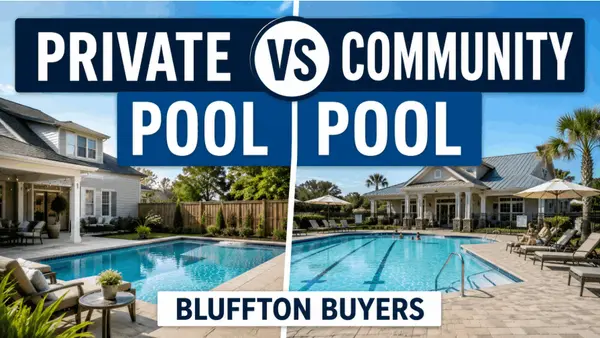
A private pool can be a major reason someone chooses a Hilton Head house over a condo or a home without outdoor amenities.
It also adds another group of systems to maintain.
The buyer may be taking responsibility for the pool surface, equipment, pumps, filters, heater, automation, plumbing, drainage, decking, fencing, lighting, electrical components, screen enclosure, spa, and surrounding landscaping.
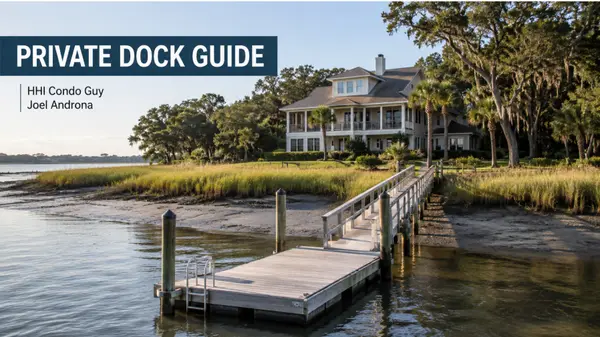
The same applies to screened porches, decks, docks where applicable, irrigation systems, outdoor kitchens, pavers, retaining structures, landscape lighting, and mosquito systems.
These features should not be evaluated only by appearance.
A pool with an older surface, aging heater, leaking plumbing, or deteriorated deck can create several projects at once. An attractive screened porch may still have corroded fasteners, damaged screens, soft wood, roof-connection problems, or drainage issues.
Outdoor space adds enjoyment. It also adds equipment, exposure, and replacement cycles.
Second-Home Ownership Requires a Local Response Plan
A full-time owner usually notices a ceiling stain, unusual HVAC sound, running toilet, fallen limb, tripped breaker, warm refrigerator, irrigation leak, or musty odor fairly quickly.
A second-home owner may not.
That delay can turn an ordinary service call into flooring damage, cabinet damage, mold remediation, spoiled food, pest activity, pool problems, or a larger plumbing repair.
Second-home buyers should decide who will enter the property after a storm, respond to a leak alarm, meet contractors, check the HVAC system, review the pool, inspect the crawlspace, clear debris, confirm power restoration, and document damage.
Some communities provide limited absentee-owner services. Sea Pines, for example, states that its security department offers absentee-owner house checks. Owners still need to understand exactly what the service includes and what remains their responsibility.
A second home does not necessarily need constant supervision. It needs a clear person responsible when something changes.
Maintenance History Has Become Part of the Property's Marketability
Current Hilton Head listings frequently emphasize improvements such as newer roofs, maintained HVAC systems, repiping, exterior paint, enhanced drainage, encapsulated crawlspaces, dehumidifiers, termite systems, irrigation work, insulation, and updated mechanical equipment.
Those details are not included only because sellers want a longer improvement list. They reduce uncertainty for the next buyer.
Recent listings have specifically highlighted annual HVAC maintenance, whole-house repiping, drainage improvements, roof replacement, encapsulated crawlspaces, dehumidification, and active termite-protection systems.
A renovated kitchen gets attention online. A documented maintenance history helps the buyer stay comfortable after the inspection.
That distinction becomes more important when two houses have similar locations, views, floor plans, and prices. The house with clearer records and fewer unresolved systems may be worth more to the buyer even when the finishes are less dramatic.
Confidence has value.
Do Not Budget With One Generic Percentage
Buyers frequently ask how much they should set aside each year for maintenance.
A generic percentage may help start the conversation, but it should not control the purchase decision.
A 1,700-square-foot patio home with a newer roof, simple landscaping, no private pool, strong drainage, and documented mechanical updates is different from a 5,000-square-foot beach-area house with multiple HVAC systems, an elevator, pool, spa, decks, extensive landscaping, older windows, rental use, and several outdoor living areas.
The maintenance reserve should be built around the actual property.
Start with the age and expected replacement period of the roof, HVAC systems, water heaters, pool equipment, windows, exterior coatings, plumbing, electrical components, appliances, irrigation, decks, driveways, and moisture-control systems. Then account for the property's location, exposure, construction, size, landscaping, owner use, rental use where permitted, and how quickly someone can respond to a problem.
Do not ask only, "What does this house cost each month?"
Ask, "Which systems am I likely to replace during the years I expect to own it?"
That answer is far more useful than a broad percentage.
How Buyers Should Evaluate Maintenance Before Closing
A home inspection remains important, but the goal should extend beyond identifying broken items.
Ask the inspector to explain patterns.
Is the crawlspace dry because the moisture system is working, or because the weather has been dry? Are stains old and inactive, or is the source unresolved? Does the drainage move water away from the house? Are the gutters and downspouts helping or contributing to the problem? Are HVAC service records consistent with the apparent condition? Is the termite agreement active and transferable? Are tree limbs affecting the roof? Do exterior repairs appear permitted and approved?
Request the seller's available maintenance records, repair invoices, warranties, permits, termite documentation, HVAC service history, pool records, moisture-control information, insurance claims history where properly available, and community approvals for major exterior work.
Obtain insurance guidance early as well. South Carolina's Department of Insurance advises consumers to compare carriers and coverage, and it notes that standard homeowners insurance does not cover flood damage. Coverage availability, exclusions, deductibles, wind and hail treatment, and flood insurance should be reviewed for the specific property rather than assumed from the seller's policy.
The inspection shows what can be seen today. The records help explain how the house arrived there.
A House Gives You More Control—and More Responsibility
A Hilton Head house can provide privacy, land, garage space, storage, outdoor living, a private pool, and more control over improvements than many buyers would have with HILTON HEAD CONDOS.
That control is part of the appeal.
It also means the owner is usually responsible for the roof, siding, drainage, trees, landscaping, structure, crawlspace, pool, driveway, exterior equipment, and the coordination of most repairs.
The buyer should not automatically avoid a house because of that responsibility. The buyer should decide whether the responsibility matches the way the property will be used.
A full-time owner who enjoys managing the property may see that control as an advantage. A second-home buyer who lives several states away may need reliable local help. A buyer who wants predictable exterior responsibility may decide a condo or smaller patio home makes more sense.
The house should support the life the buyer wants without creating an ownership burden the buyer did not plan to carry.
The Best-Maintained House Is Not Always the Newest House
Older Hilton Head houses are not automatically riskier, and newer houses are not automatically easier.
An older house may have a replaced roof, updated plumbing, newer HVAC systems, controlled crawlspace, improved drainage, storm-conscious upgrades, mature landscaping, and decades of documented care.
A newer house may still have poor grading, unresolved drainage, neglected caulking, installation defects, irrigation problems, unmaintained equipment, or no meaningful service history.
The purchase should be based on evidence.
A good Hilton Head house is not one that requires nothing. Every house requires something.
The stronger purchase is the house whose condition is understood, whose maintenance history makes sense, and whose future projects can be handled without destabilizing the buyer's budget.
Message me if you are comparing Hilton Head houses and want help looking beyond the photographs, community name, and asking price.
Is every Hilton Head house expensive to maintain?
No. Maintenance depends on the property's age, size, materials, location, exposure, landscaping, pool and outdoor features, construction type, prior care, and number of mechanical systems. A smaller, well-documented house may be easier to own than a larger or newer house with several unresolved issues.
What is the most commonly underestimated maintenance concern?
Moisture management is usually near the top of the list. Drainage, gutters, roof leaks, plumbing, HVAC condensation, crawlspace humidity, vapor barriers, grading, and stormwater can affect several parts of the house at once.
Does a Hilton Head POA maintain the exterior of a single-family house?
Usually, the individual owner remains responsible for the house and private lot, while the POA maintains specified community property and infrastructure. The exact division of responsibility should be confirmed through the community documents for the property.
Is a termite bond the same as regular pest control?
Not necessarily. General pest service may address common household insects, while termite protection may involve a separate treatment, monitoring system, bond, warranty, inspection schedule, or repair agreement. Buyers should review the actual contract and confirm whether it transfers.
Does being outside a high-risk flood zone eliminate water concerns?
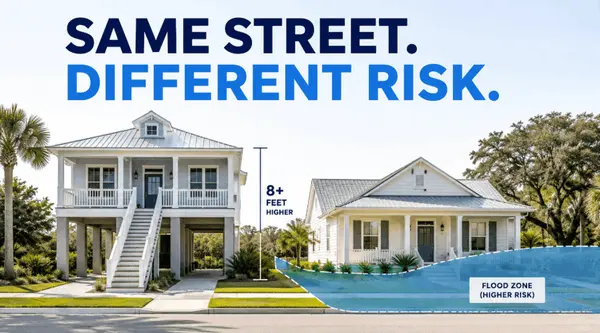
No. A flood-zone designation is not a drainage inspection. Heavy rain, clogged gutters, low areas, grading, plumbing leaks, crawlspace moisture, and stormwater problems can affect a house outside a mapped high-risk flood zone. Flood coverage is also separate from standard homeowners insurance.
How much should a buyer budget for Hilton Head home maintenance?
Build the budget from the specific house rather than relying only on a percentage. Estimate the likely timing and cost of the roof, HVAC, water heaters, pool equipment, exterior paint, windows, moisture systems, landscaping, plumbing, appliances, and other major components. The age and condition of those systems should shape the reserve.
Categories
- All Blogs (108)
- Hilton Head Condo Buyer Strategy (7)
- Beach Access & Coastal Ownership (1)
- Bluffton & Lowcountry Living (2)
- Bluffton Buyer / Seller / Comparison Topics (2)
- Bluffton Communities and Relocation (4)
- Bluffton Real Estate (8)
- Bluffton Real Estate / Relocation Guide (2)
- Buyer Advice (1)
- Buyer Guides (1)
- Costs, Fees, Insurance, Financing, and Due Diligence (1)
- Golf / Private Club / Gated Community Living (1)
- Golf / Private Club Communities (1)
- Hilton Head & Bluffton Buyer Strategy (1)
- Hilton Head Area Comparisons (1)
- Hilton Head Communities (4)
- Hilton Head Communities & Area Guides (11)
- Hilton Head Condo Buyer Guide (9)
- Hilton Head Condo Market Updates (1)
- Hilton Head Condo Seller Strategy (1)
- Hilton Head Condos & Villas (14)
- Hilton Head Homes (1)
- Hilton Head Homes + Island Living (2)
- Hilton Head Homes and Island Living (1)
- Hilton Head Real Estate (1)
- Hilton Head Seller Strategy (8)
- Hilton Head Short-Term Rental + Investment Guide (1)
- Hilton Head vs Bluffton (1)
- Hilton Head vs Bluffton / Relocation (3)
- Lowcountry Homeownership (1)
- Market Reports & Trends (4)
- Relocation and Retirement (1)
- Retirement & Relocation (1)
- Retirement and 55+ Communities (1)
- Retirement and Relocation (2)
- Retirement, 55+ & Private Club Living (3)
- Seller Strategy and Valuation (1)
- Short-Term Rentals & Investment (3)
Recent Posts