What Condo Buyers Regret After Closing on Hilton Head

What Condo Buyers Regret After Closing on Hilton Head
Buying a condo on Hilton Head can be a great move, especially if you want beach access, lock-and-leave ownership, rental potential, or a second home you can actually enjoy. But the buyers who regret their purchase usually do not regret buying on Hilton Head. They regret buying too quickly, assuming too much, or focusing on the wrong details before closing.The biggest issue is that a Hilton Head condo is not just the unit. It is the building, the regime, the insurance structure, the rental rules, the view, the beach route, the parking, the financing, the guest experience, and the long-term cost of ownership. A condo can look perfect in photos and still create problems if the buyer did not understand the full ownership picture before signing.
This matters even more in a market where buyers are comparing more carefully. Recent local market commentary showed Hilton Head condo and villa days on market increasing significantly, while buyers have become more selective around carrying costs, insurance, and rental performance. That does not mean good condos are bad buys. It means the best buyers are asking better questions before closing.
Regret #1: They Underestimated the Real Monthly Cost
he purchase price gets most of the attention, but the monthly carrying cost is where many Hilton Head condo buyers get surprised. A buyer may feel comfortable with the mortgage payment, then realize the regime fee, POA fee, insurance, taxes, utilities, management costs, repairs, and furnishing expectations make the property more expensive than expected.This is especially important on Hilton Head because many condos and villas sit inside layered ownership structures. A property may have a regime fee for the building or condo association, a POA or community fee for the larger resort or plantation, and separate costs tied to insurance, flood coverage, amenities, parking, pest control, cable, internet, security, landscaping, or capital projects. Some fees include more than others, and the only safe way to compare two condos is to look at what each fee actually covers.
The CFPB notes that condo, co-op, and HOA dues are usually paid directly to the association and are not usually included in the payment made to the mortgage servicer. It also warns buyers to factor those dues into affordability because they can range from a few hundred dollars per month to more than one thousand dollars per month. That is the practical point buyers need to understand: the fee may not be in the mortgage payment, but it is still part of the ownership cost.
Regret #2: They Looked at the Unit but Not the Building
A newly renovated kitchen can distract buyers from the bigger questions. The countertops, flooring, furniture, and paint matter, but they do not tell you whether the building is financially healthy, whether there are upcoming repairs, whether the roof or elevators need work, or whether insurance costs are likely to put pressure on future dues.
This is where condo buying is different from buying a single-family home. With a condo, you are buying into a shared building or regime. The condition of the exterior, reserves, insurance, common areas, parking, stairs, balconies, elevators, pools, and major mechanical systems can affect your future costs and resale. A beautiful interior cannot fully offset a weak association, unclear insurance, poor reserves, or a building with major deferred maintenance.
Fannie Mae’s 2026 project standards update specifically points to the risk that unit owners can face financial hardship from unexpected special assessments or higher regular assessments and dues when a project lacks the resources to maintain the property or cover unexpected operating expenses. That is exactly why serious condo buyers need to review more than the listing photos.
Regret #3: They Did Not Understand Regime Fees and Assessments
On Hilton Head, “regime fee” is one of the most important terms a condo buyer needs to understand. The regime fee may cover building maintenance, common areas, landscaping, insurance, pool upkeep, pest control, trash, water, cable, or other shared expenses, depending on the community. But every building is different, and the number alone does not tell you whether the fee is good, bad, high, low, or risky.
A lower monthly fee can look attractive until the buyer realizes the building may not be saving enough for future repairs. A higher monthly fee can feel painful until the buyer realizes it includes more insurance, reserves, maintenance, or services than a cheaper-looking alternative. The question is not just “How much is the fee?” The better question is, “What does the fee cover, what does it not cover, and what future costs might be coming?”
Freddie Mac’s condo mortgage guidance reinforces how important reserves are in project review, noting that special assessments cannot be used in place of the required reserve allocation. For a Hilton Head buyer, that matters because reserves, assessments, and long-term building maintenance can affect both ownership comfort and future financing.
Regret #4: They Assumed Short-Term Rentals Would Be Easy
A lot of Hilton Head condo buyers are interested in rental income. That can make sense for the right property, but rental potential should never be assumed. A condo may be in a popular vacation area and still have rules, permit requirements, guest restrictions, parking limitations, minimum-stay rules, management costs, or building-specific issues that change the numbers.
The Town of Hilton Head regulates short-term rentals when privately owned residential property is used as a vacation home or short-term rental for rental periods of less than 30 days. The Town also states that a short-term rental permit is separate from the annual business license, that every owner must obtain a permit in addition to the business license, and that permits are non-transferable.
The regret usually comes from buying based on a loose rental idea instead of a real rental analysis. Buyers should know whether the property is properly permitted, whether the regime allows the intended rental use, whether future bookings transfer, whether the gross rental number is realistic, and what the net income looks like after management fees, cleaning, repairs, supplies, taxes, insurance, utilities, regime fees, and owner use.
Regret #5: They Confused Gross Rental Income With Net Ownership Reality
A big rental number can make a condo feel safer than it really is. Gross rental income is useful, but it is not the same as profit, and it does not tell you whether the property is a good fit for your goals. A condo can produce strong rental revenue and still feel disappointing if the buyer underestimated expenses or overestimated how often they could personally use it.
This is a common issue with vacation-style ownership. The weeks that produce the best rental income are often the same weeks many owners want to use the property themselves. If the buyer wants both peak-season personal use and strong annual income, the math needs to be realistic from the beginning. The property may still work, but it has to be evaluated as a lifestyle and financial decision, not just a spreadsheet with optimistic rental projections.
The better approach is to separate the question into three parts: how you want to use the condo, what the property can realistically rent for, and what the net number looks like after all ownership costs. That gives a much clearer picture than relying on one headline rental figure.
Regret #6: They Overpaid for a View or Misunderstood the View
View language matters on Hilton Head. Oceanfront, ocean view, partial ocean view, near-ocean, lagoon view, golf view, marsh view, pool view, and wooded view are not interchangeable. Two condos in the same building can have very different values because one has a stronger view, better floor height, better balcony angle, or a more practical location within the complex.
Buyers regret this when they pay for the idea of a view instead of verifying the actual view. A listing may sound beach-oriented, but the view may be narrow, seasonal, blocked, angled, or less impressive in person. A condo may be “near the beach,” but the walk may feel longer with chairs, coolers, kids, guests, or older family members. A property may be in a strong rental area, but the specific view or access route may not support the premium the buyer paid.
The fix is simple but important: verify the view, the floor level, the building position, the beach route, the parking setup, and the guest experience before closing. On Hilton Head, small location differences inside the same complex can create meaningful differences in value.
Regret #7: They Did Not Pay Enough Attention to Insurance and Flood Exposure
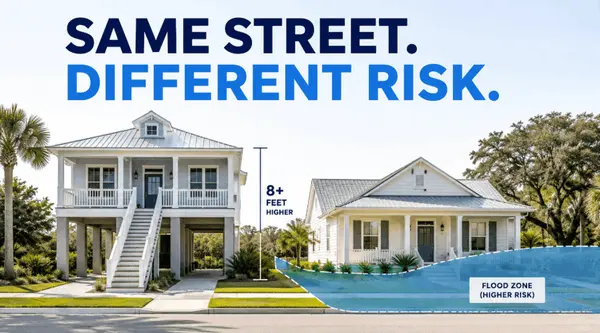
Insurance is one of the biggest ownership-cost issues buyers need to understand before buying a Hilton Head condo. Coastal property can involve wind, flood, hazard, building, and interior coverage questions, and the way those costs are handled varies by regime and property type.
Some buyers assume the regime fee covers everything. Others assume the lender or closing attorney will catch every issue. That is not a strategy. A buyer should understand what the master policy covers, what the owner needs to cover with an HO-6 policy, whether flood coverage is included or separate, what deductibles apply, and whether any insurance costs are billed separately or handled through assessments.
A local Hilton Head condo buyer guide notes that many condos near or on the water can involve additional insurance requirements, and that flood coverage may be held through an HOA master policy while lenders may still require confirmation or supplemental coverage. That is why buyers should not wait until the end of the process to understand insurance.
Regret #8: They Chose the Area but Not the Right Lifestyle
Many buyers say they want a Hilton Head condo, but that phrase covers several very different lifestyles. A Forest Beach condo can feel very different from a Palmetto Dunes villa, a Sea Pines villa, a Shipyard condo, a Folly Field beach unit, or a Shelter Cove property. The best choice depends on how the buyer actually plans to use the property.
A buyer who wants walkability, Coligny energy, restaurants, and public beach access may feel differently than a buyer who wants a gated resort community, golf, bike paths, and a quieter setting. A buyer who wants strong rental potential may need a different property than a buyer who wants peaceful owner use. A buyer who wants oceanfront views may need to accept higher carrying costs or more building due diligence than a buyer who would be happy near the beach but not directly on it.
This is where regret often starts. The buyer technically bought a good condo, but it was not the right condo for the way they wanted to live, rent, or visit. Hilton Head is not one single condo market. It is a collection of different ownership lanes, and buyers need to choose the lane before they choose the unit.
Regret #9: They Did Not Compare the Condo Against Active Competition
A buyer can make the wrong decision by looking only at sold comps or only at one building. Current active competition matters because it shows what other buyers can choose right now. If another condo has better condition, better view, lower ownership friction, stronger rental history, better furnishings, or clearer documentation, it may be the better buy even if the first condo looks acceptable on paper.
This matters because Hilton Head buyers are often discretionary. They are not always forced to buy immediately because of a job relocation or school schedule. Local market commentary has described Hilton Head as a place where buyers and sellers often have more discretion and may wait for the right opportunity. That means buyers can be patient, compare options, and pass on properties that do not feel right.
The regret comes when a buyer falls in love with one unit before understanding the rest of the market. Before closing, the buyer should know what else is active, what is under contract, what recently sold, what sat, what reduced, and what made similar condos perform better or worse.
Regret #10: They Skipped the Boring Documents
The documents are not exciting, but they are where many of the real answers are. Regime documents, budgets, meeting minutes, insurance certificates, reserve information, rental rules, pet rules, parking rules, assessment notices, financial statements, and management disclosures can tell a buyer more than the listing description ever will.
The problem is that buyers often focus on the parts that are easy to understand: photos, furniture, location, view, and price. Those matter, but the documents explain the ownership experience. They show whether the buyer is walking into a healthy, well-managed community or one with future friction.
This does not mean buyers should be scared of every older building, every higher fee, or every assessment. Hilton Head has many strong condo and villa options. It simply means the documents need to be read with the same seriousness as the inspection report.
How to Avoid Condo Buyer Regret on Hilton Head
The best way to avoid regret is to slow down before the contract becomes emotional. Buyers should understand the unit, the building, the regime, the rental rules, the insurance, the total monthly cost, the view, the beach access, the financing path, and the exit strategy before they treat the condo as the obvious choice.
A strong Hilton Head condo purchase usually starts with matching the property to the buyer’s real goal. If the goal is personal use, the property should fit the way the buyer wants to vacation or live. If the goal is rental income, the analysis should include rules, permits, expenses, management, net income, guest experience, and realistic owner use. If the goal is long-term value, the buyer should look beyond the interior and understand the building, location, ownership costs, and resale buyer pool.
The right condo can absolutely be worth owning. The regret usually comes from buying the surface-level version of the property and discovering the deeper ownership details later.
FAQ
What is the biggest regret Hilton Head condo buyers have after closing?
The biggest regret is usually underestimating the total cost and complexity of ownership. Many buyers understand the purchase price but do not fully understand regime fees, POA fees, insurance, flood coverage, assessments, rental rules, maintenance, and net rental income before closing.
Are Hilton Head condos good investments?
Some Hilton Head condos can be good purchases for the right buyer, but the investment case depends on the exact property, location, building, rental rules, fees, insurance, rental history, condition, and purchase price. Buyers should not assume every Hilton Head condo works as a short-term rental or investment property.
What should buyers verify before buying a Hilton Head condo?
Buyers should verify the regime fee, POA fee, rental rules, STR permit requirements, insurance coverage, flood exposure, reserves, assessments, financing eligibility, parking rules, pet rules, beach access, rental history, and current active competition. Property-specific verification matters more than general assumptions.
Are regime fees bad?
Not automatically. A higher regime fee may be reasonable if it covers meaningful services, insurance, maintenance, reserves, amenities, or common-area upkeep. A lower fee may look attractive but could be a concern if the building is underfunded or major repairs are coming. The key is understanding what the fee covers and whether the association is financially healthy.
Can I short-term rent any condo on Hilton Head?
No. Short-term rental use depends on Town rules, permit requirements, the specific property, the condo regime, the POA, and any community restrictions. The Town regulates rentals under 30 days, and buyers should verify both Town compliance and property-specific rental rules before purchasing.
Should I buy oceanfront or near-ocean?
Oceanfront can be the right choice for buyers who prioritize view, beach convenience, and premium rental appeal, but it often requires deeper due diligence around insurance, building condition, reserves, assessments, and carrying costs. Near-ocean can be a better fit for buyers who want beach access without paying the full oceanfront premium, depending on the actual walk route and property quality.
Thinking About Buying a Condo on Hilton Head?
The goal is not just to find a condo you like. The goal is to find a condo that still makes sense after you understand the fees, rules, insurance, rental limits, building condition, view, beach access, and resale position.
That is where local guidance matters. A good condo search should narrow the market by lifestyle, ownership cost, rental rules, building health, and buyer fit before you fall in love with the photos.
If you are thinking about buying a Hilton Head condo, villa, second home, or vacation property, I can help you compare the options before you commit.
Categories
- All Blogs (108)
- Hilton Head Condo Buyer Strategy (7)
- Beach Access & Coastal Ownership (1)
- Bluffton & Lowcountry Living (2)
- Bluffton Buyer / Seller / Comparison Topics (2)
- Bluffton Communities and Relocation (4)
- Bluffton Real Estate (8)
- Bluffton Real Estate / Relocation Guide (2)
- Buyer Advice (1)
- Buyer Guides (1)
- Costs, Fees, Insurance, Financing, and Due Diligence (1)
- Golf / Private Club / Gated Community Living (1)
- Golf / Private Club Communities (1)
- Hilton Head & Bluffton Buyer Strategy (1)
- Hilton Head Area Comparisons (1)
- Hilton Head Communities (4)
- Hilton Head Communities & Area Guides (11)
- Hilton Head Condo Buyer Guide (9)
- Hilton Head Condo Market Updates (1)
- Hilton Head Condo Seller Strategy (1)
- Hilton Head Condos & Villas (14)
- Hilton Head Homes (1)
- Hilton Head Homes + Island Living (2)
- Hilton Head Homes and Island Living (1)
- Hilton Head Real Estate (1)
- Hilton Head Seller Strategy (8)
- Hilton Head Short-Term Rental + Investment Guide (1)
- Hilton Head vs Bluffton (1)
- Hilton Head vs Bluffton / Relocation (3)
- Lowcountry Homeownership (1)
- Market Reports & Trends (4)
- Relocation and Retirement (1)
- Retirement & Relocation (1)
- Retirement and 55+ Communities (1)
- Retirement and Relocation (2)
- Retirement, 55+ & Private Club Living (3)
- Seller Strategy and Valuation (1)
- Short-Term Rentals & Investment (3)
Recent Posts