Why Online Views Do Not Matter if Buyers Never Schedule a Showing
Why Online Views Do Not Matter if Buyers Never Schedule a Showing
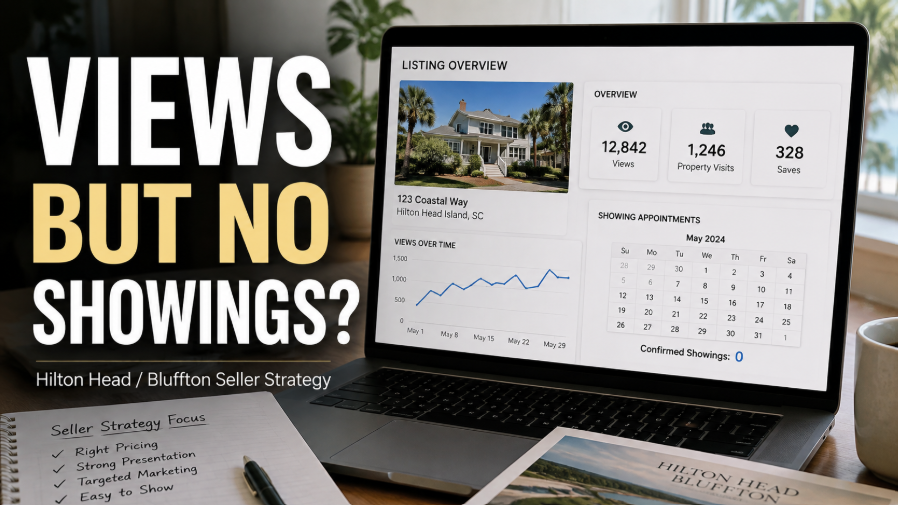
A listing can collect thousands of online views and still produce almost no meaningful buyer activity.
That number may look impressive in a seller update. It proves the property appeared in front of people and that some of them opened the listing. It does not prove those buyers considered the property strong enough to visit.
That distinction matters because homes are not sold by accumulating clicks. They are sold when a buyer moves from looking at the property online to comparing it seriously, scheduling a showing, returning for a second look, and eventually writing an offer.
A view is evidence that the marketing reached someone. A showing is evidence that the property survived the comparison.
Online Attention Is Useful, but It Is Not Buyer Commitment
Online activity is not meaningless. Strong views, saves, and shares can signal that a listing is getting attention. Zillow research has found that listings with higher engagement tend to sell faster, but Zillow also states that its total page-view count can include repeat views from the same user. A seller therefore cannot assume that 1,000 views represent 1,000 different buyers—or even 1,000 serious buying decisions.
Someone may open the listing because the first photo caught their attention. They may be curious about the price, comparing it with a nearby property, checking the renovation, looking at an unusual floor plan, or following a property they already know.
That person may have no intention of scheduling a showing.
The total view count tells us whether buyers are reaching the listing. What happens after the click tells us whether the listing is convincing them.
The Listing Has to Move Buyers Through Several Decisions
Before a buyer schedules a showing, the property normally has to survive several comparisons.
The buyer sees it beside other active listings in the same search results. They compare the opening photo, price, location, property type, square footage, condition, fees, and whatever details are immediately visible. If the property remains interesting, they open the full listing.
Once inside the listing, they compare the photography, room sizes, floor plan, updates, view, location within the community, ownership costs, and anything else that affects how the property will work.
Only then do they decide whether it deserves time on their showing schedule.
That is why a listing can attract plenty of clicks without producing appointments. The marketing may be generating curiosity while the property, price, or presentation fails to create enough confidence for the next step.
High Views With No Showings Can Be a Strong Market Message
Sellers sometimes interpret high online traffic as proof that the price must be close.
It can mean the opposite.
If a property has received substantial exposure and buyers repeatedly decline to schedule a showing, the market has had an opportunity to consider it. Buyers are seeing the listing, comparing it with the alternatives, and deciding that another property deserves their time first.
That does not automatically mean the home is bad. It means the current combination of price, condition, presentation, location, ownership cost, and buyer convenience is not creating enough urgency.
Low exposure is a marketing problem.
Strong exposure with weak showing activity is usually a conversion problem.
Price Can Stop the Showing Before It Starts
Buyers do not need to walk through a property to decide that the asking price feels ahead of the market.
They can compare it from their phone against recently listed homes, updated properties, larger floor plans, better views, lower fees, easier locations, or homes with fewer visible projects. Buyers may also be estimating the monthly payment, insurance, association fees, taxes, renovation costs, and other expenses before they ever contact an agent.
For a Hilton Head condo, that comparison may include the view, floor level, building confidence, regime fees, rental restrictions, parking, furnishings, and distance from the beach.
For a Bluffton home, buyers may be comparing condition, garage space, lot usability, neighborhood location, HOA structure, new-construction incentives, and how much work the home needs after closing.
The property does not compete only against old comparable sales. It competes against what buyers can schedule today.
A seller may still believe the property is worth the asking price. The problem is that buyers do not have to prove the seller wrong. They can simply book a showing at the next listing.
That is why a high view count should never be used to defend a price that is producing no appointments.
Good Photography Can Create Curiosity Without Creating Confidence
Professional photography is important, but attractive photos alone do not guarantee showings.
A buyer may like the opening image and then lose interest when the remaining photos reveal dated finishes, small rooms, an unclear floor plan, limited natural light, weaker views, visible maintenance concerns, or a location within the community that does not justify the price.
The opposite problem can happen when the listing does not show enough. Missing room photos, confusing image order, no floor plan, weak exterior coverage, unclear parking, or vague location information can leave buyers uncertain about what they would be scheduling.
The goal is not to hide enough information that buyers become curious.
The goal is to give serious buyers enough confidence to believe the property deserves an in-person look.
A showing should confirm the marketing, not correct it.
Property Details Can Quietly Eliminate Buyers
Sometimes the biggest objection is not visible in the first photograph.
A Hilton Head buyer may like the condo but hesitate after seeing the regime fee, rental limitations, stairs, parking arrangement, building condition, or total ownership cost. A buyer may love the location but decide the renovation would be too much. Another may need financing and become concerned about the building or project.
A Bluffton buyer may click because the home looks attractive, then move on because the garage is too small, the primary bedroom is upstairs, the yard does not work, the commute is inconvenient, or a competing new-construction home comes with stronger incentives.
These are not always marketing failures. Some properties naturally appeal to a narrower group.
The seller's job is to make sure the price reflects that narrower appeal instead of pricing the property as though every buyer will overlook the limitation.
Showing Restrictions Can Destroy Otherwise Good Interest
A buyer may be willing to see a property and still abandon the attempt if scheduling becomes difficult.
Long notice requirements, blocked days, narrow appointment windows, tenant or guest occupancy, delayed confirmations, gate-access problems, missing keys, or repeated rescheduling can push buyers toward an easier alternative.
ShowingTime advises sellers to make properties as easy to see as reasonably possible and separately tracks scheduled showings, completed showings, and buyer feedback. Those numbers reveal a different level of activity from online page views.
This is especially important with second homes, rental properties, and occupied Hilton Head condos. Buyers may be visiting for only a few days and comparing several properties in a tight window. If one condo cannot be accessed, they may not rearrange the entire schedule to come back.
Marketing can create the opportunity. Access determines whether the opportunity becomes a showing.
Current Lowcountry Conditions Make Conversion More Important
Sellers have more reason to watch the movement from views to showings when properties are taking longer to sell.
The Hilton Head Area REALTORS® June 2026 report showed days on market until sale rising to 151 days for Hilton Head General condos and villas, compared with 73 days in June 2025. The Bluffton General report showed the measure rising from 69 days to 116 days over the same period. These broad figures do not dictate the strategy for an individual property, but they do reinforce that sellers cannot assume exposure alone will create a quick result.
A slower pace gives buyers more time to compare active listings. The properties that earn showings usually give buyers a clearer reason to act through price, condition, location, presentation, or a combination of those factors.
The listing does not have to be the cheapest option.
It does have to make sense against the next best alternative.
The Pattern Changes Depending on Where Buyers Stop
Low Views and No Showings
When online exposure and showing activity are both weak, the first question is whether buyers can find the listing and whether it appears in the right searches.
The listing data may be incomplete. The first photo may not compete well. The price may place it beside stronger properties. The description may not explain an important advantage. The property may also be entering a market with limited demand at that price point.
The seller and agent should first confirm that the listing is being distributed correctly and that the online presentation is competitive.
High Views and No Showings
This usually means the property is visible, but buyers are rejecting something before visiting.
The problem may be price, condition, ownership cost, location, photography, missing information, or showing restrictions. The useful comparison is not the total number of clicks. It is how the listing performs against similar active properties and how many viewers take the next step.
High traffic without appointments should create questions, not reassurance.
Showings but No Offers
Once buyers are entering the property, the diagnosis changes.
The online marketing has done enough to earn an appointment. Something about the in-person experience or the value compared with other showings is keeping buyers from moving forward.
That may involve condition, smell, noise, room sizes, natural light, deferred maintenance, view quality, furnishings, renovation needs, fees, or price. Repeated feedback matters more than one isolated comment.
No showings usually points to an online comparison problem. Showings without offers usually point to what buyers discover when the property is compared in person.
Repeat Showings and No Offer
Repeat visits indicate stronger interest, but buyers may still be uncertain about price, inspection risk, financing, ownership costs, or the terms they believe the seller will accept.
At that stage, the listing may not need broader exposure. It may need a clearer understanding of the remaining objection and whether the property is close enough to the competition to earn an offer.
Sellers Should Measure Conversion, Not Applause
The best seller update does not celebrate a large number without explaining what happened next.
A useful review should compare online activity with similar listings, look at saves and shares where available, count showing requests and completed appointments, study repeated feedback, and compare the property with the active options buyers are choosing instead.
The goal is not to find one metric that makes the listing look successful.
The goal is to locate the point where buyers stop moving forward.
Once that point is clear, the seller can make a more intelligent decision. The answer may be better photography, clearer property information, easier access, improved presentation, a small repair, a different marketing emphasis, or a price adjustment that changes the comparison.
Reducing the price without understanding the problem can waste money. Refusing to adjust because the listing has plenty of views can waste time.
What Online Views Are Actually Good For
Online views are most useful when they are treated as the beginning of the analysis.
They can show whether the listing is reaching buyers, whether a change created renewed attention, and whether the property is attracting more or less engagement than comparable listings. They can also help distinguish an exposure problem from a conversion problem.
They cannot tell the seller that the price is right.
They cannot prove that the buyers are qualified.
They cannot explain why someone clicked.
They cannot replace showings, feedback, repeat visits, or offers.
The view count tells us the listing was seen. Buyer action tells us whether the listing is working.
Decide What the Market Is Asking You to Change
A seller should not react to every quiet day or every individual opinion. The property needs enough exposure for a pattern to form.
Once that pattern is clear, ignoring it rarely improves the result.
If buyers are not finding the listing, improve the exposure and presentation. If they are viewing it but not scheduling, examine the online comparison, total cost, price, and access. If they are showing but not offering, study the in-person objections and the active properties they preferred.
Sellers considering whether to hold, improve the presentation, or reposition the price can begin with a CURRENT PROPERTY EVALUATION based on the exact property and its active competition.
If you are ready to SELL YOUR HILTON HEAD OR BLUFFTON PROPERTY, the strategy should be built around the actions buyers are taking—not the most flattering number on the dashboard.
Online attention is valuable only when it leads somewhere.
The goal is not to win the view count.
The goal is to give the right buyer enough reason to schedule the showing.
 Frequently Asked Questions
Do Zillow views represent unique buyers?
Not necessarily. Zillow states that total page views can include repeat views by the same user. Views are better treated as a measure of listing activity than a count of separate serious buyers.
Why does my listing have a lot of views but no showings?
Buyers may be interested enough to open the listing but not convinced enough to visit. Common issues include price, condition, ownership costs, weak or incomplete presentation, property limitations, stronger active competition, or difficult showing access.
Does having no showings always mean the property is overpriced?
No. Price is one of the first issues to examine, but inaccurate listing information, poor photography, limited access, a narrow buyer pool, and weak demand can also reduce showing activity. The pattern should be compared with similar active listings before deciding what to change.
How many online views should a listing receive?
There is no useful universal target. A Hilton Head condo, a luxury island home, and a Bluffton residential property can attract very different amounts of traffic. The more useful comparison is against similar properties and how effectively those views convert into saves, showing requests, repeat visits, and offers.
When should a seller change the listing strategy?
A change should be considered after the property has received enough exposure to reveal a consistent pattern. The correct adjustment depends on where buyers are stopping: before opening the listing, before scheduling, after the showing, or before writing an offer.
Categories
- All Blogs (108)
- Hilton Head Condo Buyer Strategy (7)
- Beach Access & Coastal Ownership (1)
- Bluffton & Lowcountry Living (2)
- Bluffton Buyer / Seller / Comparison Topics (2)
- Bluffton Communities and Relocation (4)
- Bluffton Real Estate (8)
- Bluffton Real Estate / Relocation Guide (2)
- Buyer Advice (1)
- Buyer Guides (1)
- Costs, Fees, Insurance, Financing, and Due Diligence (1)
- Golf / Private Club / Gated Community Living (1)
- Golf / Private Club Communities (1)
- Hilton Head & Bluffton Buyer Strategy (1)
- Hilton Head Area Comparisons (1)
- Hilton Head Communities (4)
- Hilton Head Communities & Area Guides (11)
- Hilton Head Condo Buyer Guide (9)
- Hilton Head Condo Market Updates (1)
- Hilton Head Condo Seller Strategy (1)
- Hilton Head Condos & Villas (14)
- Hilton Head Homes (1)
- Hilton Head Homes + Island Living (2)
- Hilton Head Homes and Island Living (1)
- Hilton Head Real Estate (1)
- Hilton Head Seller Strategy (8)
- Hilton Head Short-Term Rental + Investment Guide (1)
- Hilton Head vs Bluffton (1)
- Hilton Head vs Bluffton / Relocation (3)
- Lowcountry Homeownership (1)
- Market Reports & Trends (4)
- Relocation and Retirement (1)
- Retirement & Relocation (1)
- Retirement and 55+ Communities (1)
- Retirement and Relocation (2)
- Retirement, 55+ & Private Club Living (3)
- Seller Strategy and Valuation (1)
- Short-Term Rentals & Investment (3)
Recent Posts